
Check the Venue Before You Make the Trip
A practical guide to comparing pokies, confirming venue access and understanding what online listings can—and cannot—tell you.
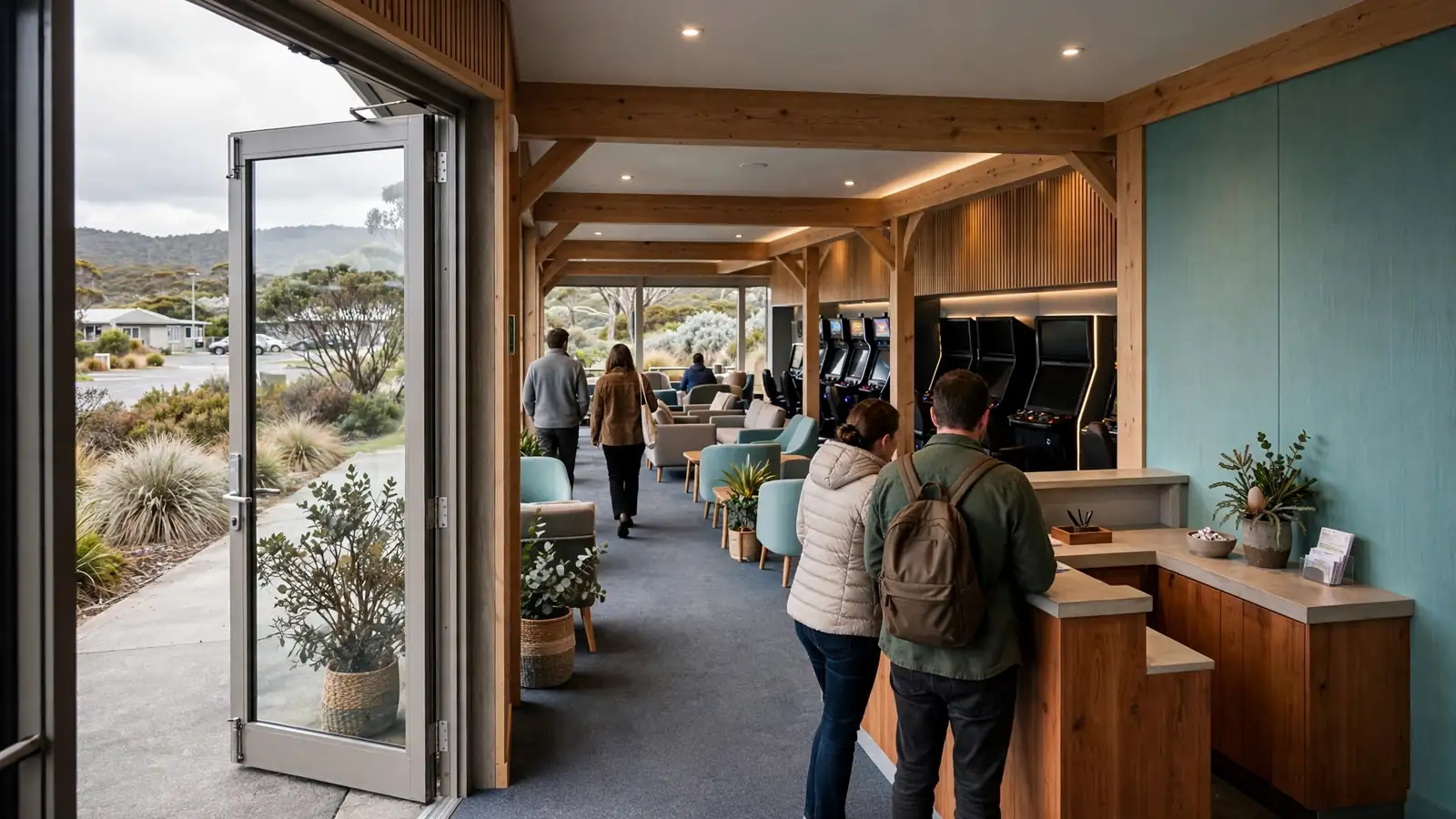
Check Whether a Tasmanian Venue Is Open Before You Travel
A listing that says “open” is a useful lead, not confirmation that you can enter a Tasmanian venue now. Online information can lag behind a temporary closure, a change to normal operations or an unexpected interruption. If the trip depends on playing pokies, confirm the venue’s current status before setting out.
Use the venue’s own information first
Start with the venue’s official website or its verified social media page. Look for a recent notice about a closure or change in service, and check that the details refer to the venue you intend to visit. A page can remain online even when its information is old, so the date and context of any update matter.
If there is a phone number published by the venue, call and ask directly whether it is open to visitors at the time you expect to arrive. Be specific: ask whether the venue is open now, rather than whether it is generally operating. If you are travelling later, ask whether it expects to be open when you get there. That gives staff a clear question to answer and gives you a chance to check again if your plans change.
An unanswered call does not confirm either that the venue is open or that it is closed. Try another official contact channel if one is available. If you still cannot verify the status, treat it as uncertain rather than relying on a map entry or an old post.
Treat map listings as a starting point
Map services can help identify a venue and provide contact details, but their status labels are not the same as direct confirmation. “Open” may reflect a schedule stored in the listing, not a live check of the doors. Reviews and photos can also be old. A recent-looking result is not necessarily a current update about today’s access.
Compare the map information with the venue’s own channels. If the details conflict, give more weight to a direct response from the venue or a clearly current notice published by it. Do not infer that a venue is open just because its page appears in a map, its phone number is listed, or visitors have posted there before.
The same caution applies when an online listing uses broad language such as “open now.” It may not tell you whether the particular venue is admitting visitors at this moment. Check the venue itself, especially when you are making a special trip or have little flexibility.
Make the question precise
Before you call or message, have the venue name and your intended arrival time to hand. Ask whether it is open to the public then, and whether anything currently affects entry. If you are going with someone else, clarify that the answer covers the part of the venue you plan to visit, rather than assuming all facilities share the same status.
A useful confirmation is recent and specific: it comes from the venue, concerns the time you plan to arrive, and answers whether you can enter. A general statement about usual operations may not settle whether the venue is available today. If you receive only an automated response or an old announcement, seek a current confirmation instead.
Keep the answer’s timing in mind. A venue’s status can change after you check, so confirm again close to departure if the journey is long or plans have shifted. If the venue says it is closed, or you cannot get a dependable answer, avoid travelling on the assumption that it will be open.
Do
- Check the venue's official website or verified social media
- Call the venue directly to ask if it is open now
- Use map listings only as a starting point for contact details
Don't
- Rely on map labels like "Open" as live confirmation
- Assume a venue is open because its phone number is listed
- Trust an unanswered call as proof of closure
Do not let a name stand in for confirmation
A search for “Crown Tasmania pokies” does not establish that a particular Tasmanian venue by that name is operating or available to visitors. Treat any result using a familiar or similar name as a lead to verify, not proof of a local venue’s current status. Check the exact venue identity and contact details through its own channel before making plans.
The same principle applies to searches for pokies open in Tasmania, including requests for a venue open now or early. Those phrases describe what you want to find; they do not verify that any specific place is currently admitting visitors. A clear answer from the venue is the practical test.
For a simple decision, sort the information into three categories: confirmed open for your planned arrival, confirmed closed, or unconfirmed. Only the first is a sound basis for travelling. This check is about whether you can visit at the time you have in mind; a general schedule is a separate question. A label alone is not enough.
What “Best” Means When Comparing Pokies
Top operators
If you’re looking for pokies options to consider in Tasmania in 2026, checking each operator’s stated licensing and any available payment details can help you assess what matters to you. Treat this list as a starting point and verify current terms before you play.
-
Thor Casino
- License
- Curacao – Antillephone N.V. (Versus Odds B.V.)
- Min. deposit
- EUR 20
Thor Casino lists a Curaçao licence through Antillephone N.V. (Versus Odds B.V.) and a minimum deposit of EUR 20.
-
Lucky Dreams
- License
- Curacao
- Min. deposit
- A$20 (POLi)
Lucky Dreams lists a Curaçao licence and a minimum deposit of A$20 when using POLi.
-
DragonSlots Casino
- License
- Curacao Gaming Authority (Jumpman Gaming Ltd)
DragonSlots Casino lists a Curaçao Gaming Authority licence held by Jumpman Gaming Ltd.
-
Neospin
- License
- Curacao Gaming Control Board OGL/2023/176/0095 (Hollycorn N.V.)
Neospin lists Curaçao Gaming Control Board licence OGL/2023/176/0095, held by Hollycorn N.V.
-
Playfina Casino
- License
- Curacao eGaming (Hollycorn N.V., since 2017)
- Min. deposit
- A$20-30 (depends on the offer)
Playfina Casino lists a Curaçao eGaming licence, with Hollycorn N.V. since 2017, and a minimum deposit of A$20–30 depending on the offer.
-
7Bit Casino
- License
- Curacao, operated by Dama N.V.
7Bit Casino is listed as operating under a Curaçao licence, with Dama N.V. as its operator.
-
House of Pokies
- License
- international iGaming licence – jurisdiction not named in the source
- Payout speed
- PayID 1-24 hours
- Min. deposit
- A$30 (PayID from A$10)
House of Pokies lists an international iGaming licence, though the jurisdiction is not named in the source. Its listed PayID payout speed is 1–24 hours, and its minimum deposit is A$30, or A$10 when using PayID.
-
JustCasino
- License
- Curacao Gaming Control Board
JustCasino lists a Curaçao Gaming Control Board licence.
-
SpinsUp
- License
- Curacao Gaming Control Board OGL/2023/174/0082 (Dama N.V.)
SpinsUp lists Curaçao Gaming Control Board licence OGL/2023/174/0082, held by Dama N.V.
-
Golden Pokies
- License
- Curacao
Golden Pokies lists a Curaçao licence.
“Best” only has meaning when you name the criterion. A pokie with a published return setting that compares favourably on paper may suit one comparison; a clear explanation of its features may matter more to another player. Neither point identifies a dependable winner. If you are weighing up pokies in Tasmania, separate what can be checked from what a past result or an appealing label might suggest.
Compare the game, not just its name
A familiar title is not enough to establish that two versions are equivalent. A specialist review reports that some game providers let casinos choose among different return-to-player (RTP) settings for the same pokie. The game name can therefore match while its configured return percentage differs between casinos.
Treat RTP as a setting to verify, not a universal property attached permanently to a title. Look for information that identifies the particular version or setting available where you intend to play. If the displayed material gives only a game name and no applicable RTP detail, you do not have enough information to compare its return setting with another version.
| Criterion | What to check | What it tells you |
|---|---|---|
| RTP setting | Whether the information applies to the version in front of you | Whether the stated return figure is relevant to that configuration |
| Feature description | How the game explains its bonus rounds and other mechanics | What can happen during play, not what must happen |
| Clarity of information | Whether the rules and settings are easy to locate and understand | How confidently you can assess the game before playing |
A higher stated RTP can be a useful point of comparison when the figures refer to the same kind of measure and specific versions, but it does not predict what will happen in a short session. Nor does it show that one game will deliver a better result to you.
Read features as descriptions, not promises
Game features can help you decide whether a pokie fits your preferences. Check how its rules describe bonus rounds, special symbols, or other mechanics, and whether those rules explain when a feature can occur. A feature’s presence is verifiable; a claim that it will appear soon is not.
Be cautious with labels such as “best paying.” They can blur two different ideas: a game’s stated return setting and the result of an individual play. A return percentage describes a statistical measure, not a personal forecast. It does not mean that a session will return that proportion of your spending, or that a particular outcome is due.
For a fair comparison, write down the criteria first: the applicable RTP setting, how clearly the rules are presented, and whether the game’s features appeal to you. Then compare like with like. If the version or setting is unclear, mark it as unknown rather than filling the gap with an assumption. A neat table is useful only when its entries refer to the same things.
Keep the outcome separate from the comparison
Every spin is generated by a Random Number Generator, so each is a separate random event. A run of wins or losses does not establish that the next spin is more likely to go one way. Past results are not evidence that a machine is “hot,” “cold,” or about to pay.
That distinction matters when comparing the best pokies in Tasmania: “best” can describe a preference or a verifiable game characteristic, but not a dependable way to win. You can assess published settings and rules. You cannot infer a certain result from them.
If you cannot confirm the relevant RTP setting, compare only the features you can verify and say plainly what remains unknown. That is more useful than a confident ranking built from incomplete details. The winner depends on your criterion—and no criterion turns randomness into a schedule.
Getting to a Venue Near the Airport or CBD
A search for pokies near a Tasmanian airport or CBD is a location question, not a guarantee that a suitable venue is inside the terminal, around the corner or easy to reach from your accommodation. Treat the map as a starting point. Before building your trip around a pin, check the venue’s own address and compare it with your actual starting point.
Tasmania has more than one airport and more than one central business district, so “near the airport” or “near the CBD” needs a specific destination to be useful. If you are arriving by air, use the airport you will land at; if you are staying in a city, use your accommodation or another exact landmark. A broad search for pokies near Tasmania can return places across the state, not just somewhere convenient for your route.
Compare the route, not just the pin
A map result can look close while still requiring a detour, a change of transport or a walk that does not suit your arrival time or luggage. Check the full route from your starting point and note how the map proposes you get there. If you are considering public transport, confirm the service and stop information with the relevant transport provider. If you plan to drive, check the route and parking arrangements independently rather than assuming they are included in the map listing.
For a venue described as being near a CBD, check which central area the result refers to and whether the address is actually within your intended part of town. “Near” is not a standard distance. It may mean a short walk to one person and an inconvenient trip to another. Choose your own practical threshold based on how you will travel.
| Your starting point | What to check |
|---|---|
| An airport | The exact airport, the venue’s address and the route between them |
| A CBD or accommodation | The relevant city centre, walking or driving route, and transport options |
| Elsewhere in Tasmania | The town or locality, not just the state-wide search area |
Use the map’s location setting carefully when searching for pokies near you. If location access is off or the device is using an imprecise location, results may be centred somewhere other than where you are. Enter a town, street or landmark yourself, then compare the displayed address with the venue’s own contact information. A pin is not an address check.
Airport searches need a separate check
Results for pokies at a Tasmanian airport may mix nearby businesses with places that appear to be on airport grounds. Do not assume that a listing is inside the terminal merely because it is shown close to an airport marker. Check the venue address and the airport’s own information before making plans around an on-site option.
The same care applies to searches for northern Tasmania. A result described broadly as “north Tasmania” may still be far from your particular town or route. Narrow the location first, then judge whether the journey works for you.

The deciding criterion here is access: a place is more practical when its location and route fit your actual itinerary. Search wording alone cannot settle that. Check the address, map the journey and confirm the location before setting out. A pin is only a pin.
What to Check at a Tasmanian Gaming Venue
A venue is not “best” simply because it has pokies. The useful comparison is operational: what support is available, how staff respond to concerns, and whether the venue’s arrangements suit your visit. Those points are more meaningful than a broad ranking that does not explain its criteria.
For larger venues, check the responsible-gambling arrangements. A report on the rule says that, from 1 July, a venue operating more than 20 gaming machines must have a dedicated responsible gambling officer (RGO) on duty while those machines are running. The officer’s role is to support responsible-gambling measures at the venue. If this matters to your choice, ask staff whether an RGO is on duty and how patrons can speak with them.
The same report describes a gambling incident register for recording events that may indicate a patron is at risk of, or experiencing, gambling harm. That makes the register part of venue oversight, not a rating of the machines. You can ask how staff handle a concern and whether there is a clear way to request help. A venue’s answer gives you a practical basis for comparison; a general claim that it takes safety seriously does not tell you what happens on the floor.
The report also says venues have a one-month grace period to remove signage and introduce responsible gambling officers. Treat that as a reported transition arrangement, rather than assuming every venue has already completed the changes. If you are comparing venues, ask what measures are currently in place. Specific answers are more useful than promotional language.
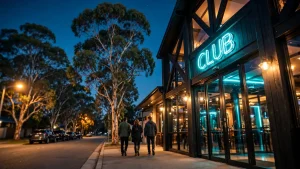
You can also compare the support options a venue makes available to patrons, such as whether staff can explain how to set limits or where to find help. Deposit limits, loss limits, session time limits and self-exclusion are recognised responsible-gambling tools, but do not assume a particular venue offers a specific process without checking. Ask how to access any option that matters to you, and whether staff can explain it before you start playing.
For a CBD venue or another Tasmanian location, use the same criteria rather than treating “best pokies venue” as a machine-quality label. Confirm the venue’s current arrangements directly, especially if a particular safeguard is important to you. You are comparing the quality and clarity of support, not predicting a result from a machine.
A practical checklist is short: ask whether an RGO is on duty where the rule applies; find out how to raise a concern; and clarify which limit-setting or self-exclusion options the venue can explain. Then compare the answers across the places you are considering. The better fit is the one that meets your needs and gives clear information—not necessarily the one with the loudest claim.
The Spirit of Tasmania and Online Casino Searches
A reference to pokies aboard the Spirit of Tasmania is not enough to establish that the ship offers them. Treat it as an unconfirmed assumption, not as a feature to plan around. If onboard entertainment matters to your trip, check the operator’s current passenger information directly and ask specifically about the facilities available on your sailing. A similarly named result, an old discussion or a search snippet may describe something different from what is available now.
The same caution applies to searches that combine “Crown”, “Tasmania” and pokies. A name in a search result does not confirm that a Crown casino operates in Tasmania, or that a venue with that name offers pokies there. Check the venue’s identity and location through its own current information before making travel plans; do not infer a Tasmanian venue from a brand name or from material about another place.

Those are questions about physical locations. Searching for real-money online pokies is a different matter, even when the wording adds Tasmania, a no-deposit offer or a bonus. A promotion does not change the legal status of the service. Under the Interactive Gambling Act 2001, operators cannot legally offer real-money online pokies to people in Australia without a domestic licence. No such licences have been issued, and Australia has no licensed online casino.
That distinction matters when you assess claims about an online casino being “legal” for Australians. A foreign licence is not an Australian licence, and an offer aimed at people in Tasmania does not become locally authorised because it is available on a phone or uses familiar payment language. Avoid treating a bonus as evidence of approval, protection or a reliable route to payment. The headline offer is not the legal test.
There is also a practical risk that deserves plain wording: if an offshore casino refuses to pay winnings, Australian players have no legal recourse in Australia to recover them. That makes promotional terms a poor substitute for enforceable local protections. A no-deposit label may sound like a smaller commitment, but it does not resolve the underlying legal position or create a local remedy.
Keep the two checks separate. For the ship or a named venue, confirm that the physical facility exists and is currently offered to passengers or visitors. For online real-money play, understand that there is no Australian-licensed online casino and that operators are not permitted to provide these services to people in Australia without a domestic licence. Neither a vessel name nor a casino brand changes that boundary. A search result is not a licence.
Pokies Hours: What “24-Hour” Searches Can and Can’t Confirm
A result describing 24-hour pokies in Tasmania is not proof that a particular venue runs its gaming machines through the night. The phrase may be a broad label, an old listing or a description that does not spell out which parts of a venue’s operations it refers to. Treat it as a lead to check, not as an opening-hours guarantee.
For regular hours, the useful question is narrower: what schedule does the venue publish for the specific day and service you plan to use? A venue’s general trading hours may not, by themselves, establish when its gaming area is available. Look for hours stated specifically for that area, and check whether the schedule distinguishes overnight periods, weekends or public holidays. If the wording is unclear, ask the venue directly.
A simple comparison helps keep the claim in proportion:
| What you find | What it can tell you | What it cannot establish on its own |
|---|---|---|
| A “24-hour” label | Someone has associated the venue with round-the-clock availability | That pokies operate overnight on your intended visit |
| A general venue schedule | The venue’s stated trading hours | That every service follows those hours |
| Hours for the gaming area | The published schedule for that area | That the schedule has not changed |
| A direct answer from the venue | The information provided for your planned visit | A permanent schedule for future dates |
“Open now” and “open overnight” are different claims. The first concerns a present moment; the second concerns the regular schedule. A listing that appears to answer one should not be treated as an answer to the other. For overnight plans, confirm the relevant hours for the day you intend to go, rather than assuming a continuous schedule from a short label.
You can also check whether a stated schedule has a clear date or applies to the period you care about. If the information is vague, contradictory or silent about the gaming area, there is no sound basis for reading it as confirmation of overnight pokies. A confident label is not a timetable.
The best choice depends on your criterion. If your priority is late-night access, favour a venue that confirms its gaming-area hours clearly for your planned visit. If you only need ordinary daytime access, overnight claims add little to the comparison. Keep the distinction simple: advertised around-the-clock availability is a claim; confirmed hours are the useful detail.
No need to guess.
How Random Outcomes Affect Pokies Comparisons
A pokie can feel predictable after a run of similar results, but that impression is not a reliable guide to the next spin. The outcome of every spin is produced by a Random Number Generator (RNG), and each spin is separate from the one before it. A sequence of losses does not make a win due, just as a recent win does not mean another is more likely next.
That distinction matters when you compare pokies in Tasmania. A machine’s recent results may be interesting to observe, but they cannot establish that it is a dependable winner. Nor can a short session prove that one game performs better than another. Random outcomes can cluster: several results may look alike, then change, without the sequence offering a dependable forecast.
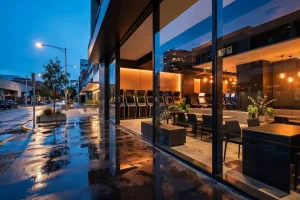
Treat a “best” label as a preference, not a prediction. You might favour a game’s theme or features, but those preferences do not make its next outcome more certain. If you are weighing up pokies in Parkes or elsewhere in Tasmania, the location does not alter the independence of an individual spin. A machine’s setting cannot be read from a lucky streak.
Bet size and maximum cash payout are also different from the chance of winning. If you are checking a maximum bet or payout figure, read the game’s displayed rules and understand what the figure describes. A payout limit is not a promise that the amount will be won; a permitted bet is not evidence that choosing it improves your prospects. Keep those comparisons separate from any expectation about the next result.
A useful way to think about “best” is to separate what you can inspect from what you cannot predict. You can compare information presented about a game and decide whether its format suits you. You cannot use previous spins to identify a sure winner, or turn a random sequence into a forecast. Past outcomes are records, not instructions.
This also puts claims about a machine being “hot” or “due” in perspective. Such descriptions may make a run of results sound meaningful, but they do not change the independence of the next spin. If a comparison depends on believing that a particular machine must pay soon, its strongest criterion is guesswork.
For a fair comparison, focus on features you can verify and avoid treating recent results as evidence of future performance. No machine can be presented as a dependable winner on that basis. Random means random.
Online Pokies, Mobile Access and the Legal Boundary
A phone or tablet changes how you access a service; it does not change the law that applies when you are in Australia. The Interactive Gambling Act 2001 prohibits operators from providing real-money online pokies to people in Australia without a domestic licence. No Australian licences for online casinos have been issued, so there is no Australian-licensed online casino.
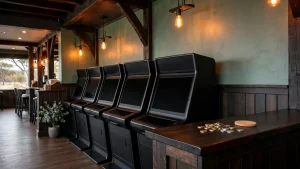
This distinction matters if you are looking for online play while in Tasmania. A site’s claim that it is available to Australian customers, or that it holds an overseas licence, does not make it locally licensed. Nor does a mobile-friendly website alter the operator’s obligations under Australian law. ACMA enforces the Act and blocks access to illegal offshore gambling sites; internet service providers must comply with its blocklist. Access may therefore be restricted, even when a site appears in a browser or an app.
The Act targets companies providing prohibited services, not individual players. Australians can legally play on offshore sites that accept them, but that does not give those sites Australian authorisation or make them subject to Australian consumer protections. If an offshore operator refuses to pay winnings, an Australian player has no legal recourse in Australia to recover them. That is a substantial practical risk, not a minor detail in the terms and conditions.
Searches for Tasmanian online pokies, mobile play near Tasmania, or higher-stakes games can blur two different questions: whether a service can be reached and whether it is authorised to provide real-money casino games here. A page loading successfully answers only the first. It does not establish a domestic licence, local oversight or a route to resolve a payment dispute.
For a decision table, the criteria are straightforward: domestic authorisation, access status and recourse if winnings are withheld. On the first criterion, there is no Australian-licensed online casino. On the second, ACMA blocking means offshore access is not assured. On the third, Australian players have no legal recourse in Australia against an offshore casino that does not pay. No single mobile feature changes those results.
If you want pokies, distinguish online gambling from play at a physical venue and check the relevant rules for that setting. Do not treat an offshore site’s availability, branding or overseas licence as proof that it is an Australian-licensed casino. A screen is not a safeguard.
CBD Clubs and Responsible Gambling Measures
A CBD or club search can help you identify places to investigate, but it does not establish that a particular club has pokies or that its safeguards suit your needs. Treat the venue name and the safety questions as separate checks. The better choice is the one whose available measures match the limits you want to keep—not simply the one that appears closest or most convenient.
Before you decide to play, find out what responsible-gambling tools are available and how they work at that venue. Common tools include deposit limits, loss limits and session time limits. These can help you set boundaries in advance; they do not change the outcome of a spin or guarantee that you will stay within a limit unless you use the tool and follow it.
Self-exclusion is another option to ask about if you want to stop access to gambling. Check how to activate it, what areas or services it applies to, and what steps are needed if you later want to change your decision. Do not assume that one venue’s process applies at another club. The useful comparison is practical: can you access the measure you need, understand its scope and set it before play?
If your concern is specifically self-exclusion at a Tasmanian venue, ask the venue directly about its process and the coverage of the exclusion. Get the details in clear terms, including whether it applies to the pokies area or other gambling facilities. A measure is only useful when you know what it covers.
Pay attention to the environment around the machines as well as the tools on offer. Signage directing patrons to gaming lounges should not be within sight of ATMs or EFTPOS terminals; signs directing patrons to ATMs should not be visible from gaming machines. These placements matter because prompts and access to cash can affect the decisions a person makes while gambling.
Keep age in the check too: the legal age for gambling in Australia, including online pokies, is 18. If you are below that age, do not gamble.
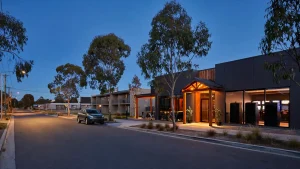
A simple comparison can keep the decision grounded: record the venue, the limits available, how self-exclusion works and any point you still need clarified. If a club cannot explain a measure plainly, treat that as an unresolved issue rather than assuming it is covered. Clear terms matter.
Cashless Play: Verify the Venue’s Options Directly
“Cashless” can describe several different things: paying for food or drinks by card, using a card or account at a machine, or accessing funds through another system. Those are not interchangeable. A venue that accepts card payments does not necessarily offer cashless play on its pokies, so check the specific service rather than treating a general payment option as confirmation.
Before travelling, contact the venue and ask what payment methods are available for playing pokies, whether any setup or account is required, and whether the method works at the machines themselves. Ask about fees or limits only if the venue confirms a particular system; do not assume that terms for one payment method apply to another. If the answer is unclear, ask for the name of the system and where its conditions can be read.
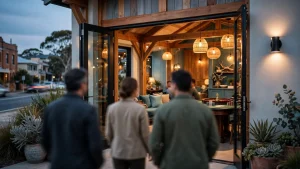
PayID is a way to transfer money through Australia’s New Payments Platform, using an email address, mobile number or ABN as an alias. That description does not establish that a Tasmanian venue accepts PayID for machine play. Nor does PayID support, by itself, demonstrate that an online gambling service is licensed, fair or transparent about return settings. In Australia, operators cannot legally offer real-money online pokies to people in the country without a domestic licence, and no such licences have been issued.
A Newcastle reference also needs checking against the exact venue and location. A place name in a listing is not enough to establish that the venue is in Tasmania or that it offers pokies, let alone a particular cashless option. Confirm the full address and ask the venue directly about its current arrangements.
Use a simple comparison: payment method, where it can be used, any conditions, and who confirms those details. If any row is unanswered, treat the option as unconfirmed. Small distinction.