
Check the Details Before Choosing a Pokies Venue
A practical guide to game settings, venue hours, location details, payment limits and responsible-gambling duties in South Australia.
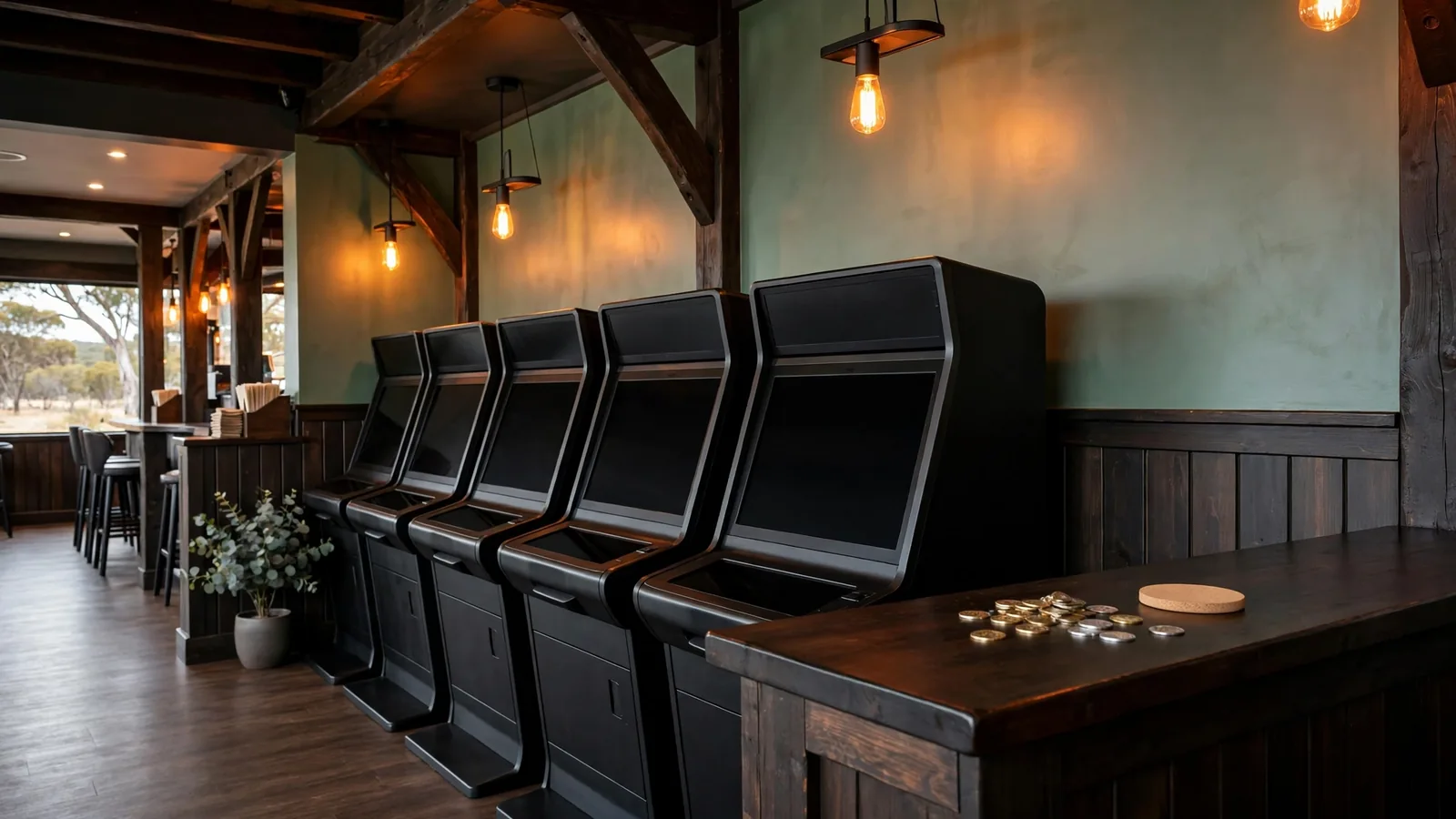
What “Best” Can Mean for Pokies in South Australia
“Best” is only useful when it names a criterion. One player may care about a pokie’s stated return setting; another may prefer a particular style of play or a clear explanation of the game’s features. Those are different comparisons, and they need different evidence. A claim that a game is among the best-paying pokies in South Australia is not evidence by itself.
For a return-based comparison, start with the published return to player (RTP) setting for the specific game. RTP is a theoretical return measure, not a promise that an individual player will receive a particular amount. Check that the figure applies to the version available at the venue or service you are assessing. A game title alone does not establish its setting.
A specialist review reports that some game providers give casinos a choice of RTP settings for the same pokie. As a result, one version of a game may have a different stated return from another. The practical comparison is not simply between familiar titles: it is between the settings that are actually disclosed for the versions being considered. If you cannot confirm a setting, there is no sound basis for treating the game as better on RTP.
Top operators
If you’re looking for pokies options in South Australia in 2026, this list gives you a starting point for reviewing the available operator information. Check each operator’s terms and suitability for your circumstances before deciding.
-
Thor Casino
- License
- Curacao – Antillephone N.V. (Versus Odds B.V.)
- Min. deposit
- EUR 20
You can note Thor Casino’s stated Curacao licence through Antillephone N.V. (Versus Odds B.V.) and its EUR 20 minimum deposit.
-
Lucky Dreams
- License
- Curacao
- Min. deposit
- A$20 (POLi)
Lucky Dreams lists a Curacao licence and a minimum deposit of A$20 when using POLi.
-
DragonSlots Casino
- License
- Curacao Gaming Authority (Jumpman Gaming Ltd)
DragonSlots Casino is listed with a Curacao Gaming Authority licence and Jumpman Gaming Ltd as operator.
-
Neospin
- License
- Curacao Gaming Control Board OGL/2023/176/0095 (Hollycorn N.V.)
Neospin’s stated licence is Curacao Gaming Control Board OGL/2023/176/0095, with Hollycorn N.V. named as the operator.
-
Playfina Casino
- License
- Curacao eGaming (Hollycorn N.V., since 2017)
- Min. deposit
- A$20-30 (depends on the offer)
Playfina Casino is listed with a Curacao eGaming licence and Hollycorn N.V. as operator since 2017. Its minimum deposit is A$20–30, depending on the offer.
-
7Bit Casino
- License
- Curacao, operated by Dama N.V.
7Bit Casino is listed as operating under a Curacao licence, with Dama N.V. named as its operator.
-
House of Pokies
- License
- international iGaming licence – jurisdiction not named in the source
- Payout speed
- PayID 1-24 hours
- Min. deposit
- A$30 (PayID from A$10)
House of Pokies lists an international iGaming licence, though the source does not name the jurisdiction. Its stated PayID payout speed is 1–24 hours; the minimum deposit is A$30, or A$10 when using PayID.
-
JustCasino
- License
- Curacao Gaming Control Board
JustCasino is listed with a Curacao Gaming Control Board licence.
-
SpinsUp
- License
- Curacao Gaming Control Board OGL/2023/174/0082 (Dama N.V.)
SpinsUp lists Curacao Gaming Control Board licence OGL/2023/174/0082, with Dama N.V. named as the operator.
-
Golden Pokies
- License
- Curacao
Golden Pokies is listed with a Curacao licence.
That still does not make a higher stated RTP a prediction of what will happen during your play. Each spin is generated separately through a Random Number Generator, so a previous result does not determine the next one. A setting can help compare theoretical returns; it cannot identify a likely winner, promise a payout, or tell you what one session will produce. No certainty. That is the point.
Build a comparison around evidence
A useful comparison separates measurable information from promotional language. You can assess whether a return setting is stated, whether it clearly applies to the version in question, and whether the description explains what the figure means. You can also compare the game’s rules and features if those details are available. If a claim gives no basis for comparison, treat it as a label rather than a result.
| Criterion | What to check | What it cannot tell you |
|---|---|---|
| Stated RTP setting | Whether a figure is published for the specific version | What your next spin or session will return |
| Version information | Whether the setting applies to the game you can actually play | Whether another venue uses the same setting |
| Game rules and features | Whether the mechanics are explained clearly | Whether you will win |
| Promotional wording | Whether “best” is supported by a stated, comparable measure | Whether the claim is independently meaningful |
This approach applies whether you are comparing pokies at a South Australian venue or trying to make sense of claims about casino pokies more broadly. Do not assume that a game’s name, graphics, popularity, or presence in more than one place means its return setting is identical everywhere. Ask what evidence supports the comparison and whether it refers to the exact version at issue.

The same care is needed with phrases such as “best paying”. They can suggest that a particular game will produce larger or more frequent wins, when the available comparison may only concern a theoretical setting. A fair comparison states the measure and its limits. Without those, the superlative is doing the work that evidence should do.
Decide what “best” means to you
Before comparing options, choose the question you actually want answered. If your priority is a published return setting, compare only settings that are stated for the relevant versions. If you care more about understanding how a game works, prioritise clear rules and feature descriptions. If the information is incomplete, record that as unknown rather than filling the gap with an assumption.
A simple table can keep the criteria separate: game or version, disclosed setting, source of the information, and any rules you want to compare. This does not rank a game by itself. It shows what is known and where a comparison cannot be made. That is more useful than a list presented as a definitive verdict without explaining its measure.

There is no single winner for every player, because “best” changes with the criterion. A return setting can support one kind of comparison, but it cannot stand in for every preference or forecast an individual outcome. When a claim does not say what was measured, or which version it covers, it has not answered the question. Judge the evidence first; leave the promise out.
Opening Now: Check the Venue, Not Just the Search Result
A result marked “open” can help you identify a venue to check, but it is not confirmation that you can play pokies there at this moment. Search services display information supplied by venues and other sources; a status label may not reflect a recent change, a temporary closure or a difference between the venue’s general operations and access to its gaming area. Treat it as a lead, not a live assurance.
That distinction matters when you are deciding whether to travel. A listing can answer a broad question about a business while leaving the practical one unresolved: are pokies available to patrons right now? Even when a venue appears to be open, the result alone cannot establish that the relevant area is operating or accepting visitors. Current, venue-specific confirmation is the useful test.

What “open now” can and cannot tell you
A search result is a snapshot, not a conversation with the venue. Its label may be based on posted information rather than a direct check of conditions at the time you view it. The result might also refer to the venue as a whole, not specifically to pokies. Those details can be easy to overlook when the word “open” is prominent.
Check that the listing is for the South Australian venue you actually intend to visit. Similar names, map pins and broad location settings can make a result look relevant when it is not the right place. Read the address rather than relying only on the venue name or the order in which results appear. If your device’s location is inaccurate, nearby results may not match your intended area.
Then use a current venue-controlled contact channel to ask the specific question: are pokies available to patrons now? A phone call is direct; an official venue page or current notice may also help. If the venue cannot confirm access, do not treat a search label as a substitute. A short check before setting out is less costly than discovering that the information answered a different question.

Check the exact detail before you leave
Keep the confirmation narrow and practical. Make sure you have the correct venue, and ask whether the pokies area is accessible at the time you plan to arrive. If your visit depends on a particular entrance or part of the premises being available, ask about that too. Do not assume that a general “open” status covers every service or area.
If you cannot reach anyone, compare the information available rather than turning one label into certainty. Look for a recent notice from the venue and check whether the address and details match the place you mean. A result with no clear update time gives you less reason to rely on it for an immediate trip. Conflicting information is a reason to pause and confirm, not to select whichever answer is more convenient.
Searches such as “pokies open now in South Australia” express an immediate need, but the wording does not make the information live. Nor does searching for an early or late opening establish that a particular venue is accepting patrons at that point. Those are questions for the venue’s current confirmation, not deductions from the search phrase or a generic status marker.
Do
- Check the venue's own current contact channels
- Verify the exact street address
- Ask if the pokies area specifically is accessible
Don't
- Rely solely on a search result's "open" label
- Assume a general open status covers the gaming area
- Trust a search label as a substitute for venue confirmation
Keep location and timing separate
Results can also be shaped by where a device thinks you are and what area you have entered. Before acting, check that the displayed address is in the area you intend to visit and that the listing is for a physical venue. A result’s prominence is not proof that it is closest, current or suitable for your plans.
For an immediate visit, the most useful sequence is simple: identify the exact venue, check the address, and contact it through a current channel to confirm access to pokies now. If the answer is uncertain, make another check before travelling. That is not needless caution; it is the difference between a search result and a confirmed visit.
A payout-percentage query is a separate matter. A venue appearing open does not tell you the return setting of a particular pokie, and a payout-related snippet does not confirm that a venue is operating now. Keep those questions distinct: one concerns access at this moment, the other concerns information about a game. Neither can stand in for the other.
Use “open now” as a starting point, not a promise. For a South Australian pokies visit, the decisive detail is current confirmation from the specific venue you plan to attend. Search labels are convenient. They are not the venue.
Pokies Near the Airport: What to Confirm Before You Travel
A result described as “near the airport” is only useful if it identifies the airport, the venue and the route between them. Those details can be blurred by broad location labels, map pins or pages written for a different place. Before you set off, confirm the venue’s full street address and check that the map pin matches it.

Start with the airport you intend to use. South Australia is a state, not a single neighbourhood, and a result that mentions the state may still refer to a venue far from your arrival point. “Near me” is no more precise: its meaning depends on the location assigned to your device, which can be wrong or outdated. Treat the wording as a starting point, not a measure of distance.
Check the destination, not just the label
Look for the venue’s own address, then compare it with the address shown on the map. If the page names one suburb but the pin appears elsewhere, pause before relying on either. Check whether the listing is for a physical venue at all; broad pages can mix descriptions of places, services and games without establishing that a particular venue is at the stated location.
The same care applies when a result combines an airport with terms such as “central”, “north” or “CBD”. Those labels describe different kinds of areas, and they do not tell you how close a place is to your terminal. A central-area result is not automatically an airport-area result. Nor does a broad South Australian label establish a convenient route.
If a place name in a result seems to point to another state or region, do not assume the page has correctly matched your intended destination. Check the state and locality in the venue address. A familiar name appearing beside “South Australia” may reflect a mixed-up listing rather than a nearby option.
Confirm the route you will actually use
A map distance can be misleading if it does not reflect your travel method. Check the route for the way you plan to get there, and make sure it begins at the airport or terminal you will use—not a similarly named location. If you expect to walk, drive or use public transport, check that the displayed route is for that mode. A pin that looks close on a map does not establish that the route is straightforward.
If the journey matters to your plans, confirm the address directly with the venue before travelling. Ask whether the address shown is the correct entrance for visitors, particularly if the map pin leads to a larger complex or a nearby road. Keep the address available so you can compare it with your navigation result on the day.
A simple location check
Before leaving, make sure you can answer these points:
- Which airport and terminal are you travelling from?
- What is the venue’s full address, including its suburb and state?
- Does the map pin match that address?
- Is the route shown for your intended mode of travel?
- Has the venue confirmed that the address is current?
If any answer is unclear, resolve it before making the trip. A page can associate pokies with an airport, a central area or a broad regional label without proving the specific location you need. The useful comparison is not which result sounds closest; it is which destination has an address and route you can independently match. Proximity needs a pin—and a check.
Online Pokies and Deposits: The Legal and Payment Limits
The legal position matters more than a bonus label. Under the Interactive Gambling Act 2001, companies cannot lawfully provide real-money online pokies to people in Australia without a domestic licence. No Australian online casino holds such a licence, so a site presenting itself as a local real-money casino is not operating under an Australian casino licence.
The law is directed at operators, not individual players. That does not make offshore play a safe financial choice. If an offshore casino withholds your winnings, you have no legal recourse in Australia to compel payment. A polished website, a local-sounding offer or a promise of quick withdrawals does not change that position. Nor does a large maximum bet make a service lawful or protect your deposit.
Read the offer as a contract
A no-deposit offer still has terms. Before accepting one, check whether winnings are withdrawable, what wagering requirement applies, which games count towards it, and whether the offer has a cash-out cap or an expiry condition. If those details are unclear or difficult to find, treat the uncertainty as part of the cost—not as a reason to proceed.
Wagering requirements describe how much qualifying play an offer demands before a withdrawal can be requested. A specialist review has suggested looking for a requirement of 35x or lower and described anything above 40x as punishing. That is an assessment from that type of source, not a legal standard or a guarantee that an offer is worthwhile. The calculation also depends on whether the multiplier applies to the bonus alone or to the deposit and bonus together. Read the exact terms rather than judging by the headline.
A bonus can make a balance look larger while making the money harder to withdraw. Check whether your own deposit is tied to the promotion, whether a maximum bet applies while wagering, and whether particular games are excluded. “No deposit” describes how an offer begins; it does not mean there are no conditions.
Deposits and withdrawal risk
Before entering payment details, check the operator’s terms for deposit restrictions, withdrawal conditions, identity checks and any fees. Do not assume that a deposit method proves the site is licensed, that its games are fair or that a withdrawal will be honoured. Payment access and legal protection are separate issues.
Keep a record of the terms shown when an offer is accepted. If the operator changes or interprets them in a way that blocks a withdrawal, that record may help you understand the dispute, but it does not create an Australian remedy against an offshore casino. The central risk remains: a company can accept money while leaving you without an effective way to recover it.
Claims about high limits, real-money play or the best-paying pokies do not answer the basic questions of legality and recourse. Compare the written conditions, not the promotional wording. If the service is an offshore online casino, an attractive deposit offer cannot supply the protection that an Australian licence would provide.
South Australian Pokies Venues and Responsible-Gambling Duties
A venue’s approach to gambling harm is a more useful point of comparison than a polished room or a long machine floor. When considering South Australian pokies venues, look for clear evidence that staff can respond to a patron who may be experiencing harm, and that the venue follows the duties that apply to its operation. These checks do not identify a “best” venue by themselves; they help you assess how responsibly a venue manages its pokies area.
A report published by regionriverina.com.au describes a requirement for venues with more than 20 gaming machines to have a dedicated responsible gambling officer (RGO) on duty whenever the machines are operating, beginning 1 July. The report also describes a one-month grace period for venues to introduce RGOs and remove signage. Because this is a reported change, rather than a basis for assuming every South Australian venue has already implemented it, check the current requirements and the venue’s own arrangements before treating it as a settled point of comparison.
The practical question is not simply whether a venue says it has an RGO. You can ask whether an officer is on duty while the machines are operating and how patrons can raise a concern or seek assistance. A dedicated role gives you a specific point of contact; it does not, by itself, establish how effectively a venue handles a difficult situation. Clear answers are more informative than a general statement about care.
The same report says venues will be required to maintain a gambling incident register. It is intended to record occurrences, including situations where a patron’s behaviour indicates they may be at risk of gambling harm or affected by it. For someone comparing venues, the register is an operational safeguard, not a public scorecard: its existence does not tell you how many incidents occurred or how well they were handled. What matters is whether staff know how to recognise a concern and follow the venue’s process for recording and responding to it.
Signage is another concrete detail to notice. Directions to gaming lounges should not be placed within eyeshot of ATMs or EFTPOS terminals; directions to ATMs should not be within eyesight of gaming machines. These are not decorative choices. They affect how patrons are directed around the venue, so look at the placement rather than relying on a general claim that signage has been reviewed.
If you are comparing venues in South Australia, use the same questions for each: is an RGO on duty when required, can staff explain how concerns are handled, and are incident records and signage addressed in the venue’s procedures? That gives you a consistent basis for comparison without pretending that a venue’s location or size proves its standards. Specific answers matter.
Pokies Hours: Why “24 Hour” Needs Venue-Specific Verification
A claim that a venue is open around the clock is not enough to establish that its pokies are available at every hour. The venue’s general trading schedule and the operating hours for its gaming area may not be identical. If the distinction matters to your plans, confirm the schedule for the pokies themselves rather than relying on a broad label.
For South Australian pokies opening hours, the useful detail is a venue-specific schedule: which area it covers, which days it applies to, and whether it is still current. A short “24-hour” description may omit those conditions. Treat it as a starting point, not a complete account of when you can play.
Check the schedule, not just the headline
Before travelling, look for hours published by the venue and check that they refer to the gaming area. If the information is unclear, contact the venue and ask directly. You can make the question precise: are the pokies available throughout the stated hours, and does that schedule apply on the day you intend to visit?
This is different from checking whether a venue is open at this moment. A live status tells you about now; a schedule sets out the hours a venue says it operates. Neither automatically answers the other question. A venue might have a stated schedule while a temporary change affects a particular day, so confirm the detail relevant to your visit.
What to clarify
When comparing hours, keep the same criteria for each venue:
- Area: Do the listed hours apply to the pokies or to another part of the venue?
- Days: Is the schedule the same across the week?
- Exceptions: Are there changes for the date you plan to attend?
- Confirmation: Is the information published by the venue, or should you contact staff to check it?
This keeps a comparison useful. One venue may suit you better because its confirmed gaming hours fit your plans; another may be more suitable on a different day. “Best” depends on that practical criterion, not on the length of a headline.
If you see a claim of 24-hour pokies in South Australia, verify its scope with the venue before setting out. Do not assume that a general opening-hours entry describes uninterrupted access to the gaming area. A specific answer from the venue is more useful than a broad label. Keep the date and area in view, and compare like with like.
Crown Casino Searches and the South Australia Mismatch
A reference to Crown in a South Australian pokies search does not establish that a Crown casino operates in the state, or that a South Australian venue has Crown pokies. Treat the name as a possible location mismatch until the venue itself is identified and its location confirmed. A familiar brand in a result is not proof of a local address.
Separate the question into two parts: which venue is being described, and whether it is actually in South Australia. Check the venue’s own current information for its full name and street address, then confirm that the address is in the location you intend to visit. If a result gives only a brand name, a map pin, or a broad regional label, it has not answered both parts.

The same care applies when looking for a “best pokies room” in South Australia. A room cannot be compared meaningfully until you know which venue it belongs to and what the comparison is meant to measure. If you care about the atmosphere, layout or available facilities, look for current details from that venue rather than assuming a Crown-related result describes a South Australian room. Without a confirmed local venue, there is no sound basis for ranking it against other rooms.
Cash payout limits need venue-specific confirmation too. A search result mentioning a maximum cash payout does not show that the figure applies to a South Australian venue, or that it is current. Before relying on it, check the venue’s own stated payout arrangements and ask staff to clarify any conditions. Do not infer a limit from another property’s information or from an unattributed snippet.
Keep the comparison in a small table if several results look similar:
| Check | What it establishes |
|---|---|
| Full venue name and address | Whether the result refers to a South Australian location |
| Venue’s own description | Whether it identifies a pokies room or relevant facilities |
| Stated payout arrangements | Whether the information applies to that venue |
If the details do not identify a South Australian venue, set that result aside rather than treating it as evidence about local pokies. That keeps Crown-related information separate from the broader question of what South Australian venues offer. A name is not a location.
CBD Clubs and Pokies: Local Details Still Need Checking
A club in a central business district may appear to fit your plans, but a map pin or short listing does not establish what is available inside. For a useful comparison, separate the questions: is the place in the area you mean, does it offer pokies, and does the club’s access policy suit you? A venue that scores well on one point may not meet the others.
Start with the club’s own current information, then contact it if anything important is unclear. Check the full address rather than relying on a broad “CBD” label; that term can cover different areas depending on how a listing describes its location. Confirm that pokies are available to patrons, and ask about any entry or membership conditions that could affect your visit. Do not infer those details from a directory entry or an old review.
“Best” depends on your criterion. If you want a club close to a particular part of the CBD, compare the actual address and route. If you care about the wider club experience, check which facilities and services are currently offered, rather than assuming that every club provides the same mix. If pokies are your deciding factor, confirm their availability directly. A polished listing is not a specification.
Machine numbers, venue names and local comparisons should not be treated as reliable unless they come from current, venue-specific information. Even then, a count does not tell you whether the club suits your needs. Keep the comparison practical: location, access conditions and the features you personally value. No invented league table required.
- Confirm the full street address is in the intended area
- Verify that pokies are available to patrons
- Check for any entry or membership conditions
- Confirm the specific facilities or services offered
If you are looking at self-exclusion, ask the club how its process works and what locations or services it covers before relying on it. Do not assume that an arrangement made with one venue applies everywhere. If you want to avoid gambling, make that boundary the deciding criterion rather than comparing clubs.
For South Australian CBD clubs, the useful next step is a direct check with the venue about the detail that matters to you. Listings can help identify possibilities; they cannot settle every local detail. Verify first. Less guesswork.
Cashless Pokies and PayID: A Payment Method Is Not a Quality Signal
“Cashless pokies” can describe a move away from cash, but it does not tell you which payment options a particular South Australian venue accepts. PayID is a bank-transfer identifier, not a feature you can assume is available at a pokie machine or venue. Check with the venue for its own payment arrangements.
PayID works through Australia’s New Payments Platform (NPP). Instead of sharing account details for a transfer, a sender can use an alias such as an email address, mobile number or ABN. The platform is supported by all major Australian banks and uses end-to-end encryption. Those features describe how a payment moves; they do not assess the recipient.
That distinction matters especially online. PayID availability does not establish that a gambling site is licensed in Australia, fair, or transparent about its games. The Interactive Gambling Act 2001 prohibits companies from offering real-money online pokies to people in Australia without a domestic licence, and no such licences have been issued. There is no Australian-licensed online casino. The law targets operators, not individual players, but a player who uses an offshore casino has no legal recourse in Australia if it withholds winnings. ACMA also blocks access to illegal offshore gambling sites.
If a site advertises PayID, treat that solely as a payment claim—not a quality mark or reason to deposit. BetStop is not a safeguard against offshore casinos: it applies to Australian-licensed operators and does not bind offshore sites.
A reference to Newcastle does not, by itself, identify a South Australian venue or confirm that a local venue offers cashless play. Treat the place name as something to verify directly, rather than evidence of a specific location or payment facility. Payment convenience and venue identity are separate checks.
South Australia Pokies: Keep Age and Play Limits in View
Before you take part in gambling, check the basic eligibility rule: in Australia, you must be at least 18 years old. That applies to pokies as well as other forms of gambling. Age is a firm threshold, not a preference you can adjust.
Personal limits are a separate decision. Deposit limits can restrict how much money you add; loss limits can set a boundary on what you are prepared to lose; and session time limits can help you decide when to stop. These controls work best when you choose them before play, while the decision is still clear, rather than treating them as a response to a losing session.
Self-exclusion is another available tool if you want to prevent or pause your access to gambling. Consider it alongside limits, not as a substitute for them: each addresses a different way play can exceed what you intended. If you are comparing options for South Australian pokies, the relevant question here is not which choice is “best”, but which control matches the boundary you want to maintain.
BetStop is the Australian self-exclusion register, but its reach has an important limit: it applies to Australian-licensed operators and does not bind offshore sites. Do not assume that registering there blocks access to every gambling service. That distinction matters when you are deciding which safeguards will actually apply to your circumstances.
A practical check is to set a deposit, loss or time limit before starting, then stop when it is reached. If you need a stronger barrier, consider self-exclusion. Keep the choice deliberate and the boundary plain. Limits are not a winning system. They are a way to keep a gambling decision within bounds you chose in advance.
What is the legal age for online gambling in Australia?
You must be at least 18 years old to gamble online in Australia.
Are online pokies legal for Australian players?
Australian players can legally play on offshore sites that accept them, but offering real-money online pokies to Australians without a domestic licence is illegal, and no such licences have been issued. There is no Australian-licensed online casino, and you have no legal recourse in Australia if an offshore casino refuses to pay your winnings.
What does “wagering requirement” actually mean?
It is the turnover multiplier that determines how much you must bet before you can withdraw bonus-related winnings. For example, a $500 bonus with a 40x requirement means $20,000 in bets; if the requirement applies to a $500 deposit plus a $500 bonus at 35x, it means $35,000 in bets.
Do PayID deposits qualify for bonuses?
Yes, PayID is treated like any other qualifying deposit method, so it qualifies when the offer’s terms include it.