
Check the rules before choosing a bonus-buy game
The guide covers legal access, demo play, configured versions, RTP and stake checks, with Sweet Bonanza as an example.

Where Australian Players Can Access Bonus-Buy Pokies
For people in Australia, the first question about a casino offering bonus-buy pokies is not which game or payment method it has. It is whether the service may legally offer online casino games to customers here. Under the Interactive Gambling Act 2001, operators cannot provide online pokies to Australian residents. The restriction also covers online casino services such as poker and table games. A website being reachable, or describing itself as licensed overseas, does not make its offer lawful in Australia.
The law places the obligation on operators, not individual players: Australians are not penalised simply for playing at an offshore site. That distinction matters, but it does not turn an offshore casino into a locally regulated service. If a dispute arises over an account, payment or withdrawal, you should not assume Australian consumer protections will apply. Offshore operators sit outside that framework.
The Australian Communications and Media Authority (ACMA) enforces the federal gambling rules and monitors compliance. It can ask internet service providers to block websites that provide prohibited interactive gambling services or advertise them in Australia. Blocking is an active part of enforcement, not a theoretical footnote. A site that worked at one point may later become inaccessible; a different route to a site does not change its legal status.
Top operators
If you’re looking for bonus-buy slots in Australia, use this list as a starting point and check each casino’s game availability and terms before you play. The details below are limited to the information available for each operator.
-
Thor Casino
- License
- Curacao – Antillephone N.V. (Versus Odds B.V.)
- Min. deposit
- EUR 20
Thor Casino is listed with a Curaçao licence from Antillephone N.V. (Versus Odds B.V.) and a minimum deposit of EUR 20. Check whether its available games include the bonus-buy slots you want.
-
Lucky Dreams
- License
- Curacao
- Min. deposit
- A$20 (POLi)
Lucky Dreams is listed with a Curaçao licence and a minimum deposit of A$20 via POLi. Check its game selection and terms for bonus-buy availability.
-
DragonSlots Casino
- License
- Curacao Gaming Authority (Jumpman Gaming Ltd)
DragonSlots Casino is listed with a Curaçao Gaming Authority licence, held by Jumpman Gaming Ltd. No deposit details are provided here, so check the casino’s own terms and game selection.
-
Neospin
- License
- Curacao Gaming Control Board OGL/2023/176/0095 (Hollycorn N.V.)
Neospin is listed with Curaçao Gaming Control Board licence OGL/2023/176/0095, held by Hollycorn N.V. Check its current game selection for the bonus-buy titles you’re seeking.
-
Playfina Casino
- License
- Curacao eGaming (Hollycorn N.V., since 2017)
- Min. deposit
- A$20-30 (depends on the offer)
Playfina Casino is listed with a Curaçao eGaming licence held by Hollycorn N.V. since 2017, and a minimum deposit of A$20–30 depending on the offer. Check the applicable offer terms and whether your preferred bonus-buy slots are available.
-
7Bit Casino
- License
- Curacao, operated by Dama N.V.
7Bit Casino is listed as Curaçao-licensed and operated by Dama N.V. Check its game selection and terms to confirm bonus-buy availability.
-
House of Pokies
- License
- international iGaming licence – jurisdiction not named in the source
- Payout speed
- PayID 1-24 hours
- Min. deposit
- A$30 (PayID from A$10)
House of Pokies lists an international iGaming licence, but the jurisdiction is not named in the available information. Its stated PayID payout speed is 1–24 hours, and its minimum deposit is A$30, or A$10 when using PayID.
-
JustCasino
- License
- Curacao Gaming Control Board
JustCasino is listed with a Curaçao Gaming Control Board licence. Check its current game selection and terms for bonus-buy options.
-
SpinsUp
- License
- Curacao Gaming Control Board OGL/2023/174/0082 (Dama N.V.)
SpinsUp is listed with Curaçao Gaming Control Board licence OGL/2023/174/0082, held by Dama N.V. Check the casino’s game selection to see whether it offers the bonus-buy slots you want.
-
Golden Pokies
- License
- Curacao
Golden Pokies is listed with a Curaçao licence. The available details are limited, so check its terms and game selection before choosing it for bonus-buy slots.
ACMA reports that enforcement actions have resulted in the blocking of more than 1,455 illegal gambling and affiliate websites since November 2019. There is also a discrepancy in published figures for services leaving the market after enforcement began in 2017: one account puts the number above 210, while another reports more than 190. Those figures describe different reported counts, not a guarantee that any particular service has disappeared or is safe to use.
A practical access check
When you encounter a site presenting itself as a bonus-buy casino, separate four questions that are often bundled together:
- Is the offer lawful for Australian customers? The Australian restriction applies to operators offering online pokies here, including when the operator is based offshore. An overseas licence does not amount to Australian authorisation.
- Can the site be reached? ACMA blocking can affect access to prohibited services. Availability at a given moment is not proof of approval or protection.
- What happens if there is a dispute? Offshore operators are outside Australian consumer protection. Consider that exposure before entering personal or payment details; do not treat a site’s own claims as a local remedy.
- What does a payment option establish? A familiar payment method says nothing about whether the casino is lawful, reliable or subject to Australian oversight.
A specialist market review reports that several offshore operators it tested accepted PayID. Treat that as a finding about the services reviewed, not a market-wide rule or endorsement. Payment availability can change, and ease of transferring funds does not resolve the legal or consumer-protection concerns. Convenience is not a safeguard.
Searches for a casino where you can buy a slot bonus can also mix together materially different things: the game feature, the operator’s location, and the rules applying to Australian residents. A label such as “bonus buy” only describes a possible game function. It does not establish that an operator may offer the game in Australia, that access will remain available, or that you have a local avenue for resolving a complaint. Keep those questions separate.
Nor should a ranking of “best” bonus-buy casinos be treated as a legal assessment. A comparison based on payment methods, game catalogue or interface cannot make a prohibited service lawful. For Australian readers, the decisive access criterion is the legal position; after that comes the practical risk of dealing with an offshore business beyond the local consumer-protection system. There is no locally licensed online-pokies option to recommend as a workaround.
This is why the distinction between operator responsibility and player exposure needs careful wording. The law prohibits operators from offering the service, while individual players are not penalised for playing offshore. That does not mean there is no risk: blocking may interrupt access, and consumer remedies may be limited. You can recognise the difference without mistaking it for an invitation to proceed.
The relevant threshold is also straightforward: gambling is for adults aged 18 or over. That age requirement does not alter the restriction on operators or provide an exception for offshore sites. A careful access assessment therefore starts with the law and the limits of recourse, rather than with a promise of games, bonuses or payment speed.
A familiar name, a working webpage or a convenient payment route can make an offshore service look ordinary. None changes the regulatory position. Read the access question in that order: legality, enforceability, then exposure if something goes wrong. The game feature comes later. A tidy checklist, not a green light.
What a Demo Can—and Cannot—Tell You
A demo can help you understand how a game presents its rules and features before you make any decision about real-money play. It is useful as a viewing tool: you can follow the on-screen instructions, see how a round unfolds and judge whether the layout is clear to you. It is not a rehearsal that reveals what a later session will produce.
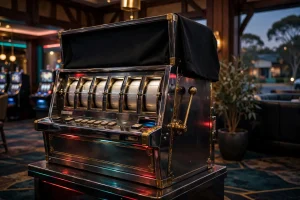
That distinction matters especially when a game includes a bonus-buy feature. If a demo makes that feature available, you can observe how the game describes the purchase and what happens on screen after it is selected. You can inspect the sequence of play, the symbols or meters shown, and how the game explains a feature’s outcome. Those observations help you understand presentation and mechanics. They do not establish that a particular outcome is likely, or that a future bonus will resemble the one you watched.
What you can inspect
A bonus-buy slots demo can be treated like a walkthrough of the game interface. Pay attention to the information the game actually displays, rather than relying on assumptions formed from a title or a promotional image.
| A demo may help you inspect | A demo cannot establish |
|---|---|
| How the controls and instructions are presented | What your next spin will do |
| How a round or feature is shown on screen | Whether a particular result is due |
| Whether the rules are understandable to you | That a demo outcome will recur in real-money play |
| How the game communicates a win or feature result | That an observed sequence predicts future results |
The practical value is comprehension. You can notice whether instructions explain the sequence clearly, whether important details are easy to find, and whether the visual effects make it harder or easier for you to follow what is happening. A demo may also let you see how the game responds when a feature begins. That is a way to inspect its presentation, not a measure of how often the feature will appear.
For a buy bonus slot demo, keep the observation narrow: what does the game show, and what do its rules say? Do not treat a dramatic animation, a near miss or a large displayed result as evidence about future spins. Those are events in the demo session, not signals about what comes next.
What it cannot predict
Online pokies use a Random Number Generator (RNG). Each spin is a separate random event, independent of earlier and later spins. A run of wins in a demo therefore does not make a loss more likely next, and a run without a feature does not mean that one is now due. The same applies in reverse: a striking demo result does not make a similar result more likely when you later play for real money.
A demo is not a forecast. It cannot tell you whether a bonus-buy decision would produce a return, how much a future feature might pay, or whether a particular sequence will repeat. Watching one session gives you examples of what the game can display, not a timetable for when those outcomes will happen. Random outcomes do not keep score for the player.
Nor should you assume that a demo result proves how a real-money session would behave. The demo is a separate play environment; what you can directly assess is the version and information presented in that mode. The visible rules may help explain the game, but they do not turn observed results into reliable evidence about another session.
Use the demo as an inspection, not a test of luck
If the game offers a demo, take time to read its instructions and follow a round without rushing through the screens. Note which details are explained and which remain unclear. If the feature rules are difficult to understand, that is useful information about the game’s presentation. It says nothing about whether a future outcome will be favourable.
A bonus buy can make a feature available through a selection in the game, but seeing that selection in a demo should not be mistaken for evidence that using it is worthwhile. The demo can show the sequence that follows within that play mode; it cannot settle what the same choice would mean in a real-money session. Keep those questions separate.

A demo also cannot make gambling lawful where it is prohibited. In Australia, the Interactive Gambling Act 2001 bars operators from providing real-money online casino games, including pokies, to people in the country. A practice mode does not alter that legal position for real-money services. This matters because an entertaining preview and permission to gamble are different things.
The sensible takeaway is modest: use a demo, where available, to understand the game’s instructions, controls and on-screen feature flow. Treat every result as one random event in that mode. Nothing more.
RTP, Randomness and the Bonus-Buy Decision
RTP can help you compare bonus-buy pokies, but it answers a narrower question than many players expect. It describes a game’s theoretical return across an enormous volume of spins, often millions. It does not say what you will get back from one spin, one bonus round or one session. A percentage is a long-run measure, not a forecast.
That distinction matters when a feature lets you pay to enter a bonus rather than wait for it to occur during ordinary play. The purchase changes how you reach the feature; it does not turn the game’s theoretical RTP into a promise about the outcome. A high figure may be a useful comparison point, but it cannot establish that a particular bonus purchase will return more than it costs.
What the percentage can tell you
RTP is a statistical calculation of expected performance over a very large number of spins. In theory, a higher RTP indicates a better return over time than a lower RTP, all else being equal. That makes it relevant when comparing games or versions, especially if long-run theoretical return is your main criterion.
The phrase “over time” needs care. Each spin is a separate random event generated by a Random Number Generator (RNG), independent of earlier and later spins. A run of results does not make a particular result due, and a previous bonus outcome does not tell you what the next bonus will pay. Randomness does not keep a running account and correct the balance for an individual player.
This is why the strongest use of RTP is comparison, not prediction. If two options are being assessed on theoretical return, the higher published RTP is the more favourable figure on that criterion. It does not automatically make that option preferable for every purpose, nor does it settle questions about stake settings, game rules or whether the bonus-buy feature suits your preferences. “Best” depends on the criterion.
 High-Volatility Slots in Australia: How They WorkLearn how high volatility affects payout frequency and potential win size, how it differs from RTP, and why a dry spell never…
 Pokies Tips and Tricks: What Can Actually HelpLearn which pokies choices can help you manage play, why spins remain random and independent, and why no system can predict a…
A threshold, not a guarantee
A practical screening point is to look for an RTP of 96% or higher. Treat that as a way to narrow a comparison, not as a safety line or a promise of a particular return. A game above the threshold can still produce a losing result; one below it does not become predictable either.
The distinction is especially important for bonus buys because the cost is concentrated in a specific feature entry. RTP does not tell you whether that individual entry will produce a return above its cost. Nor does it provide a reliable way to infer the size or timing of a win from the displayed percentage. The calculation only becomes meaningful across the huge volume of play it describes. For one purchase, the outcome remains uncertain.
A useful comparison table would therefore separate the published RTP from the decision it can support:
| Criterion | What it helps you assess | What it cannot establish |
|---|---|---|
| Published RTP | Theoretical long-run return | The result of an individual spin or bonus buy |
| Higher RTP | More favourable theoretical return than a lower figure | A guaranteed profit or better next outcome |
| RTP at or above 96% | A screening threshold for comparison | Whether a particular feature entry will pay |
Where to check
The game’s rules or paytable are the usual places to find its RTP. Read the displayed figure in the game itself, rather than relying only on a short description elsewhere. If you are comparing bonus-buy options, record the stated RTP beside each game and use the same criterion throughout. Check the in-game paytable for the configured RTP before depositing.
That check keeps the comparison grounded in the figure attached to the game you are viewing. It still does not change what RTP means: a theoretical average across a vast number of spins, not a prediction for your next result. Keep the distinction clear.
Finding Slots That Let You Buy the Bonus
A bonus-buy option is a game feature, not a setting you can assume is available wherever a title appears. The lobby tile may show the game’s name or artwork, but it does not establish that the bonus can be purchased, or that the version shown has a particular configuration. The useful check is inside the game’s own information and controls.
Do
- Check the in-game rules or paytable
- Verify the explicit description of feature purchase
- Read the terms within the specific game version
Don't
- Rely on the lobby tile or artwork
- Assume a bonus symbol proves a purchase option exists
- Infer availability from a review or video
There is also an important Australian limit: the Interactive Gambling Act 2001 prohibits operators from providing real-money online pokies to people in Australia. This is not a guide to finding a way around that restriction. If you are assessing a game’s design or reading its rules, keep that separate from accessing prohibited real-money play.
Confirm the feature in the game
Open the rules, help or paytable panel and look for an explicit description of a feature purchase. A game may explain that a player can pay to enter a bonus round, or it may have no such option at all. A bonus that is triggered through ordinary play is not the same thing as a bonus-buy feature. Nor does a bonus symbol in the artwork prove that a purchase option exists.
If the game describes a purchase, read the terms shown in that version rather than relying on a general description elsewhere. Check what the purchase activates, how the cost is presented, and whether the rules identify any conditions or limits. If the information panel and the game controls do not clearly match, treat the feature as unconfirmed. A button alone is not a substitute for rules explaining what it does.
This distinction answers the practical question of how a bonus is bought on a slot: where a purchase feature exists, its instructions and cost should be presented within the game. There is no universal button or process that applies to every title. Do not infer availability from a video, a review, or another version of the same game.
- Confirm rules explicitly describe a purchase feature
- Verify what the purchase activates
- Check the configured RTP in the in-game panel
- Ensure controls and written rules agree
Check the configured RTP
The game’s displayed return-to-player figure is another detail to verify in the in-game information panel. A specialist review reports that an operator selects the RTP build and that this setting is not shown on the lobby tile. That makes the tile a poor place to confirm the configuration. Check the rules or paytable for the version actually displayed, and do so before any real-money wagering.
If the panel does not state the RTP clearly, or the figure differs from information you have seen elsewhere, do not assume the versions are identical. The relevant figure is the one attached to the game configuration in front of you, not a value copied from a general description. Keep the two checks separate: confirmation that a bonus-buy feature exists does not confirm the RTP, and an RTP figure does not prove that a bonus can be purchased.
A simple comparison table can prevent those details from getting blurred:
| Check | What to confirm |
|---|---|
| Bonus purchase | The rules explicitly describe a purchase feature |
| Feature terms | The game explains what the purchase activates |
| RTP | The in-game panel states the configured figure |
| Consistency | The controls and written rules agree |
If any item remains unclear, the feature or configuration has not been verified. Better to leave the row blank than fill it with an assumption.
Free Play Is Not a No-Deposit Offer
“Free” can describe two different things in a pokies context. Free play usually means a game is opened in a demo mode, where spins use simulated credits rather than funds deposited for wagering. A no-deposit offer, by contrast, is a promotional label for a real-money account credit or another incentive said to be available without a deposit. They are not interchangeable, and the word “free” does not explain the conditions attached to either.
For bonus-buy play, the distinction matters. A demo may let you access a game’s bonus-buy feature using simulated credits, if that feature is enabled in the demo version. It does not establish that a real-money promotion includes the same access, or that any winnings or credits from demo play can be withdrawn. The demo is a way to interact with the game; it is not itself a no-deposit promotion.

A no-deposit claim needs its own terms. Before treating it as an offer, you would need to know what is being provided, whether it can be used on the game in question, and what conditions apply to any resulting balance. The label alone does not tell you those things. If the conditions are absent or unclear, there is no sound basis for assuming that the offer funds a bonus buy or makes its outcome withdrawable.
Keep the two categories separate when comparing pages or account screens:
| What you see | What it can mean | What it does not establish |
|---|---|---|
| Demo or free-play mode | A way to run a game without wagering deposited funds | A cash bonus, a withdrawable balance, or a promotion |
| No-deposit promotion | A claimed incentive that does not require an initial deposit | That it applies to every game or feature, or has no other conditions |
The practical test is simple: identify whether the game is in demo mode or whether the account is showing a promotional credit, then read the relevant terms. Do not treat a demo balance as a cash offer, or a promotional label as proof that a bonus-buy feature is included. Different things; different rules.
Neither route predicts what a paid spin would do. Each spin is generated independently by a Random Number Generator, so a sequence in free play does not carry forward into real-money play. A demo can show how the interface behaves; it cannot reserve a result for later.
If you are weighing up bonus-buy pokies, judge free play only by what it actually lets you inspect. Judge any promotion by its written conditions. The wording may sound similar. The distinction is not.
Online Bonus-Buy Games: Check the Configured Version
A game’s title and artwork can identify the pokie, but they do not tell you which configuration is running. That distinction matters when you are checking a bonus-buy game: the displayed version may have an RTP setting that differs from another version of the same game.
Online pokies use a Random Number Generator (RNG) to produce outcomes, and each version has a theoretical return to player (RTP). The RTP describes a long-run statistical calculation, not a forecast for a particular spin or bonus round. A bonus-buy option does not change that basic point: it gives access to a feature, not knowledge of what the feature will return.
A specialist review reports that the operator selects the RTP build, while the lobby tile does not show which build is configured. Treat the tile as a label, not as confirmation of the game’s settings. To check the version, open the game and read its information panel or paytable. Find the RTP stated there and confirm that the information belongs to the game currently loaded, rather than relying on a figure attached to a thumbnail or a general description.
This check is more useful than comparing titles alone. Two games may share a name and visual design but present different RTP figures because they are configured differently. If the in-game panel does not make the setting clear, you do not have a confirmed figure to compare. A tidy lobby tile is not a substitute.

The same approach applies when considering online bonus-buy games as a category. First identify the exact game and version; then verify the in-game information. Only after that can the published RTP serve as a meaningful comparison point. It still cannot rank a game as best for every player, because the preferred choice depends on the criterion you care about—not just the return figure.
Keep the check narrow. The panel can tell you the configured RTP and game rules; it cannot tell you how a future spin will land. Nor does a displayed feature button establish that a particular bonus result is likely. Configuration is checkable. Outcomes are not.
That is the useful distinction: verify the build in the game itself, and do not infer its settings from the lobby.
Testing Bonus-Buy Play for Free
A free demo can help you check whether a game’s bonus-buy control is visible and how its rules are presented, without treating a test session as a real-money result. In Australia, however, demo access does not change the legal position: online casino-style games are prohibited services when provided to people in the country. Do not take a demo link as evidence that a service is lawful or endorsed.
Inspecting a Demo
-
1
Review the information panel
Look for the bonus-buy feature description, trigger conditions, and game rules.
-
2
Inspect the paytable
Locate the displayed RTP and prize information for the specific configuration loaded.
-
3
Verify the controls
Confirm whether the bonus-buy control is visible and matches the written rules.
If you encounter a demo in a permitted context, use it as a rules inspection rather than a try-out for future outcomes. Open the game’s information panel first. Look for a description of the bonus-buy feature, its trigger conditions and any relevant game rules. If the option is not clearly shown in the game itself, do not assume that the title supports it simply because a lobby image or description suggests it does.
Then inspect the paytable. It is where a slot’s RTP is usually displayed, alongside its symbols and prize rules. Read the game information rather than relying on a short tile or promotional label; the latter may not explain which configuration is loaded. Keep the check narrow: confirm what the game says, not whether a particular feature appears likely to pay.
A useful free-play note can be simple:
| Check | What to record |
|---|---|
| Bonus-buy control | Whether it appears in the game |
| Feature rules | The stated trigger and operation |
| Paytable | The displayed RTP and prize information |
| Configuration | Whether the game panel identifies the version |
Do not use demo outcomes to estimate what a later real-money session will return. A sequence that reaches a feature, or one that does not, is only the result of that session. The demo is a way to read the interface and rules, not a rehearsal with predictive value.
Keep the boundary clear: free access can answer questions about presentation and mechanics. It cannot establish that real-money play is lawful, make an offshore service safe, or promise a repeatable result. A tidy checklist helps. It does not change the odds.
How Sweet Bonanza’s Bonus Feature Works
Sweet Bonanza’s bonus feature centres on free spins triggered by scatter symbols. A specialist review describes four or more scatters as awarding 10 free spins. Treat that as a description of the version covered by that review, not a promise that every version or configuration will behave identically.
The free-spin round changes the role of multiplier bombs. During the feature, bombs can appear alongside the symbols involved in winning tumbles. Their values are added together, then applied to a winning tumble. The order matters: the bomb values are combined first, so the multiplier effect is considered against the tumble’s win rather than treated as a separate prize on its own.

A tumble is a sequence in which a winning group clears and new symbols fall into the open spaces. The feature’s action can therefore unfold in stages: a winning group forms, symbols disappear, and replacements may create another win. Multiplier bombs appearing during free spins can affect a winning tumble in that sequence. They do not turn every spin or every symbol drop into a win; their described role is to multiply a tumble that has already produced one.
A specialist review describes this combined-multiplier mechanic, but details can vary with the version being played. The game’s rules are the practical reference for the particular version on screen. Read the feature description alongside the paytable so the trigger, free-spin award and multiplier handling are clear before play.
This also helps distinguish the bonus feature from a bonus-buy option. The feature is the free-spin round and its mechanics; a purchase option, where a game version offers one, concerns how a player enters that round. The two ideas are related, but they are not interchangeable. Knowing how scatters trigger the round does not, by itself, establish whether a particular version permits direct entry by purchase.
For a concise comparison, focus on three points: the scatter condition shown in the rules, the number of free spins stated there, and how multiplier bombs are applied to winning tumbles. That gives you a clear account of the feature without assuming every Sweet Bonanza version has identical settings. The details matter.
Check the Stake Range Before Buying a Bonus
A stake range describes the permitted amount per spin; it does not tell you whether a bonus purchase is affordable or suitable. For Sweet Bonanza, a specialist review reports stakes from A$0.20 to A$100 per spin, while noting that the upper limit varies by operator. Treat that as a reported range, not a setting guaranteed to appear in every version.
The range matters because two versions of the same game can present different maximum stakes. A low minimum may make a game appear accessible, but the maximum is not a measure of value, and a higher limit does not improve the odds of a bonus outcome. Stake settings are a comparison criterion, not a verdict.

Keep the per-spin stake separate from the cost of buying a feature. The figures above describe spins; they do not establish the price of a bonus purchase. Do not calculate or assume that price from the stake range. Check the game’s displayed terms for the specific version instead, and do not treat a purchase option as a route to a predictable result.
If you are comparing slots with a bonus-buy feature, record the minimum and maximum stake shown for each game version, then note whether the values refer to ordinary spins or a feature purchase. That simple distinction prevents unlike figures from ending up in the same column. If a displayed range differs from a review’s report, the active game information is the relevant detail for that version.
A table can make the comparison clear:
| Criterion | What to record |
|---|---|
| Per-spin range | The minimum and maximum shown in the game |
| Version | The game configuration being viewed |
| Feature cost | The separately displayed purchase price, if offered |
A range is a boundary, not a recommendation. The best fit depends on the stake settings you are assessing—not on the largest number on screen.
Comparing Sweet Bonanza by Its Published RTP
If theoretical return is your main comparison criterion, start with the RTP displayed for the specific game version—not a figure repeated in a general description. A specialist review reports Sweet Bonanza at 96.51%, but that is not a figure to assume applies everywhere: versions can show different RTPs.
The useful comparison is therefore between the published figures for the versions you are assessing. A higher RTP theoretically indicates a better return over time than a lower one. That makes RTP relevant when you are weighing a bonus-buy game against another option, but it does not make one version the best choice for every player. Your preferred criterion may be different.
| Comparison point | What to take from it |
|---|---|
| Sweet Bonanza figure reported by a specialist review | 96.51% |
| Version shown to you | May display a different RTP |
| Higher published RTP | Better theoretical return over time than a lower figure |
Treat the reported number as a reference point, not a universal setting or a promise about results. If you are deciding which slot to buy a bonus in, a headline RTP alone cannot settle the question: first establish which version the figure describes, then compare like with like. A number without its version is a weak comparison.
This approach is more useful than calling any game the best bonus to buy into on RTP alone. It gives you a clear criterion—published theoretical return—while leaving room for other preferences. Sweet Bonanza can be one named comparison point, but its reported figure should not be transferred automatically to every version. The displayed configuration matters.
Can Australian players legally play Sweet Bonanza?
Individual players are not penalised for playing at offshore sites, but operators cannot legally offer online pokies to Australian residents. Sweet Bonanza is available to Australian players only through offshore-licensed casinos, which sit outside Australian consumer protection.
How is the RTP of slots calculated?
RTP is a theoretical calculation of the return a slot is expected to produce over a vast number of spins, often millions. You can usually find a game's RTP in its rules or paytable.
Do higher RTP slots guarantee bigger wins?
No. A higher RTP theoretically offers a better return over time, but each spin is random and independent, so it does not guarantee bigger wins.