
Know what “pay by phone” means before depositing
PayID uses a mobile number or email as a payment identifier, while carrier billing charges a phone account or prepaid balance.
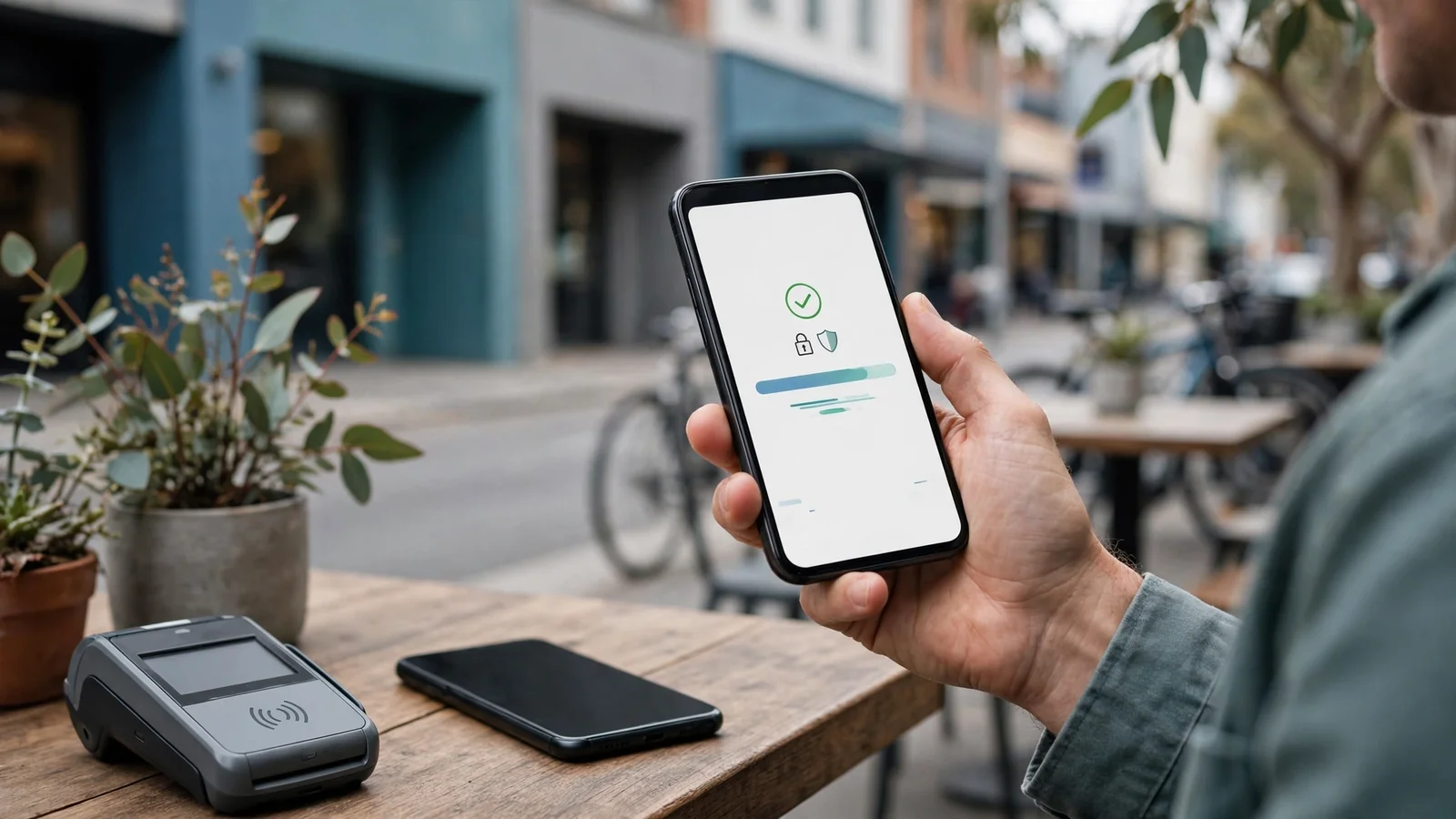
A Mobile Number Can Identify a PayID Payment—It Does Not Put a Casino Charge on Your Phone Bill
A mobile number can appear in two payment conversations and mean two different things. With PayID, it can serve as an identifier for a bank payment. With carrier billing, a purchase is charged to a mobile phone account or deducted from a prepaid balance. The shared reference to a phone number does not make these methods interchangeable.
PayID is a payment service provided through Australia’s New Payments Platform (NPP). It lets people send and receive money using an identifier, such as a mobile number or email address, rather than relying only on bank account details. The number identifies where a payment is directed; it does not turn the payment into a charge made by your telecommunications provider.
That distinction matters when a page describes a mobile casino payment or an online casino payment “by phone”. Those phrases could mean using a phone to access a banking app and make a PayID transfer. They could also suggest carrier billing, where a charge is associated with the phone account. The words alone do not establish which method is meant. Look for the named payment method, not just the mention of a mobile.
Top operators
If you’re looking for a casino you can use from your phone, check that its available payment options suit you before signing up. The details below highlight the specific licensing and payment information available for each entry.
-
Thor Casino
- License
- Curacao – Antillephone N.V. (Versus Odds B.V.)
- Min. deposit
- EUR 20
Its listed licence is from Curacao’s Antillephone N.V. and names Versus Odds B.V. The minimum deposit is EUR 20.
-
Lucky Dreams
- License
- Curacao
- Min. deposit
- A$20 (POLi)
The listed minimum deposit is A$20 when depositing via POLi, and the casino is described as licensed in Curacao.
-
DragonSlots Casino
- License
- Curacao Gaming Authority (Jumpman Gaming Ltd)
The listed licensing detail names the Curacao Gaming Authority and Jumpman Gaming Ltd.
-
Neospin
- License
- Curacao Gaming Control Board OGL/2023/176/0095 (Hollycorn N.V.)
Its listed licence is Curacao Gaming Control Board OGL/2023/176/0095, with Hollycorn N.V. named as the operator.
-
Playfina Casino
- License
- Curacao eGaming (Hollycorn N.V., since 2017)
- Min. deposit
- A$20-30 (depends on the offer)
The casino is listed as licensed by Curacao eGaming, with Hollycorn N.V. named and a start date of 2017. Its minimum deposit is A$20–30, depending on the offer.
-
7Bit Casino
- License
- Curacao, operated by Dama N.V.
The listed details identify a Curacao licence and Dama N.V. as the operator.
-
House of Pokies
- License
- international iGaming licence – jurisdiction not named in the source
- Payout speed
- PayID 1-24 hours
- Min. deposit
- A$30 (PayID from A$10)
PayID payouts are listed as taking 1–24 hours, and the minimum deposit is A$30, or A$10 when using PayID. The source describes its licence as international but does not name the jurisdiction.
-
JustCasino
- License
- Curacao Gaming Control Board
Its listed licensing detail is the Curacao Gaming Control Board.
-
SpinsUp
- License
- Curacao Gaming Control Board OGL/2023/174/0082 (Dama N.V.)
The listed licence is Curacao Gaming Control Board OGL/2023/174/0082, and Dama N.V. is named as the operator.
-
Golden Pokies
- License
- Curacao
The available detail identifies Curacao as its licensing jurisdiction.
PayID on a phone is still a bank payment
A PayID transfer can be initiated from a mobile device, but the device is only the tool used to access the payment service. The mobile number used as a PayID identifier is not, by itself, permission to charge the number’s phone bill. In practical terms, “pay by phone” may describe the screen in your hand, while “pay by phone bill” describes a different source of funds.
A simple comparison helps:
| What the phrase may mean | What identifies or funds the payment |
|---|---|
| PayID using a mobile number | The number is an identifier for a payment through the banking system |
| Carrier billing | The charge is associated with a mobile account or prepaid balance |
| Paying on a mobile device | The device is used to access a payment method; the device does not define that method |
The key criterion is the payment route. If the payment instructions name PayID and direct you to use your bank, the relevant method is PayID—not a charge added to your phone bill. If a page says “pay by phone bill” without clearly identifying the provider, terms and payment route, that wording is not enough to establish how a charge would be made.
Check what the payment wording actually promises
Before treating a mobile payment claim as phone-bill billing, read the cashier’s method description and any linked conditions. Look for an explicit statement that the charge goes through a mobile carrier or appears on a phone account. A mobile icon, a phone number field, or the ability to open a payment page on your phone does not prove that.
The distinction also protects you from confusing payment identification with payment authorisation. A PayID identifier helps direct a transfer to its recipient. It does not mean the recipient can bill your carrier, and a phone number appearing on a payment page does not establish that a casino has a carrier-billing arrangement. The displayed method and the final confirmation screen should match. If they do not, do not proceed on the assumption that one kind of payment is another.

There is a separate and important Australian context. Under the Interactive Gambling Act 2001, it is illegal for operators to provide real-money online casino games, including slots, poker and table games, to people physically located in Australia. That restriction applies regardless of whether a site’s wording refers to PayID, a phone bill, a card or another payment route. A payment label does not change the legal status of the underlying service.
So, if you encounter a claim about mobile pokies paid through a phone bill, separate three questions: Is the payment method specifically described as carrier billing? Is the payment instead a bank transfer identified as PayID? And what service is being offered to someone in Australia? Treating those as one question can obscure what is actually happening.
PayID’s mobile-number feature is useful as an identifier within the payment network. It should not be read as evidence that a phone account can be charged for a casino deposit. A phone in your hand, a mobile number used as a PayID, and a charge on a phone bill are three distinct things. The wording needs to say which one applies.
What Happens When You Deposit with PayID
A PayID deposit is a sequence of simple steps, but the payment reference matters as much as the amount. The process starts on the casino’s cashier page and finishes in your banking app. If the casino asks for your player ID or username in the reference, include it exactly as instructed; leaving it out can stop the deposit from being credited automatically.
Before you confirm the payment
Open the casino’s deposit area and select PayID. Enter the amount you intend to deposit, then follow the displayed instructions to open or use your bank’s app. Check the recipient details shown by the casino against the recipient shown in your banking app before sending money. Do not rely on a saved payee or an earlier transfer if the details on screen differ.
The casino may provide a payment reference format or ask you to add your account’s player ID or username. Copy that identifier into the payment description or reference field as requested. Check for missing characters or accidental spaces before you proceed. This small field is not decorative: if the casino uses it to match incoming payments to accounts, an incorrect or absent reference can leave the deposit waiting for manual handling.
The final confirmation happens in your bank app. Review the amount, recipient and reference there, then authorise the transfer. The casino’s cashier instructions and the fields available in your banking app should agree. If they do not, pause rather than guessing which detail to change.

After you send it
PayID deposits are generally received by casinos within seconds; the typical arrival window is around 3 to 15 seconds. That describes the expected transfer arrival, not a reason to send the money again if your balance does not update immediately. First check that the transfer appears in your banking app and that the reference was entered correctly.
If the payment has left your bank but is not visible in the casino account, compare the submitted reference with the instructions you were given. A missing player ID or username may prevent automatic crediting. In that case, the deposit can remain pending while support processes it manually. Keep the payment details available when contacting support, so you can describe what was sent and identify the transfer without making another payment.
Repeated transfers can turn a small mismatch into a larger problem. If the first payment is not credited, verify its status and reference before trying again. A second deposit does not correct the first reference; it creates another payment to track.
A practical check before sending
| Check | What to confirm |
|---|---|
| Deposit method | PayID is selected in the casino cashier |
| Amount | The amount in the banking app matches the amount you chose |
| Recipient | The recipient details match the casino’s displayed instructions |
| Reference | The required player ID or username is included and spelled correctly |
| Confirmation | You authorise the transfer only after checking these details |
This order makes it easier to spot where a delay may have started. A wrong amount or recipient is a banking-app issue to resolve carefully; a missing account reference can make the casino’s matching process harder. Keep the two checks separate.
When the deposit does not appear
Start with your bank app: confirm whether the transfer was completed, rather than assuming a casino balance that has not changed means the payment failed. Then check the payment description and reference. If the requested identifier is missing or mistyped, contact the casino’s support team and explain that the payment may need manual processing. Follow the casino’s instructions for providing payment details, and avoid sharing banking passwords or authorisation codes.
When the reference is correct and the bank shows the transfer as completed, support can help establish whether it has been matched to your account. The key distinction is between a payment still in progress and one that has arrived but has not been credited to the right player record. Treating those as the same problem can lead to duplicate deposits.
Making a PayID Deposit
-
1
Select and Enter
Open the casino's deposit area, select PayID, and enter the amount you intend to deposit.
-
2
Verify and Transfer
Follow instructions to open your bank app and check that the recipient details match the casino's instructions before sending money.
-
3
Include Reference
Copy the required player ID or username exactly into the payment description or reference field.
-
4
Authorise
Review the amount, recipient, and reference in your bank app, then authorise the transfer.
For someone comparing payment methods, the useful criterion here is not the label “mobile” but whether the payment is sent from the banking app with the required account reference intact. PayID is initiated there; your phone is the device used to approve the transfer, not a substitute for the casino’s matching details.
Small field, large consequence.
PayID Casino Payments: What the Network Can—and Cannot—Tell You
A PayID transfer can settle in real time through the New Payments Platform (NPP). That describes the movement of money between accounts; it does not tell you when a casino account will be credited, whether a withdrawal request will be approved, or whether a gambling service may lawfully provide its games to you.
That distinction matters in Australia. Under the Interactive Gambling Act 2001, it is illegal for operators to provide real-money online casino games, including pokies, to people physically located in the country. A payment rail’s ability to transfer funds does not change that legal position.
Settlement is one step, not the whole process
When the NPP completes a transfer, the banking side has processed the payment. A casino’s own systems may still need to match it to an account or review a withdrawal request. Those are separate actions, handled outside the payment network.

For withdrawals, a specialist review has identified the operator’s internal review as a possible source of delay, rather than the PayID rail itself. Treat that as a distinction between processes, not a timetable or a promise about any particular operator. A transfer network cannot certify that an account is ready for payment or that a request has passed an operator’s checks.
The useful comparison is therefore not simply “fast” versus “slow.” It is bank settlement versus account processing. A transfer can settle promptly while an operator’s separate handling remains unresolved. Fast money movement is not the same as fast access to money.
Your bank sets the transaction ceiling
PayID limits are set by the bank you use, and they differ between banks. Most major Australian banks allow transactions of AUD 1,000 to AUD 5,000 per transfer, with daily limits ranging from AUD 10,000 to AUD 20,000. Those figures describe bank limits, not a casino’s deposit or withdrawal limits.
Before making any transfer, check the limit shown by your own bank. A bank may apply its own controls to your account, and a limit that applies at one institution should not be assumed to apply at another. The NPP does not set one universal PayID amount for every customer.
There are consequently at least two separate ceilings to distinguish: the amount your bank permits you to send, and any amount a service says it will accept or pay out. The bank’s transfer limit answers only the first question. It does not establish that a particular gambling operator accepts PayID, supports PayID withdrawals, or can legally offer casino games in Australia.
What a payment method cannot establish
A PayID label alone does not verify the identity or legal status of the recipient, guarantee that a payment will be credited, or establish what happens if a transfer is disputed. Do not treat the existence of a payment option as proof that a casino is legitimate or authorised to serve Australians. In this market, the law’s restriction on online casino services remains in place regardless of the payment method displayed.
If you encounter a request to transfer money in connection with online casino play, the bank’s settlement speed is not a reason to proceed. Check the recipient carefully and consider the legal position before sending anything. The network can move a payment. It cannot make the underlying service lawful.
PayID Deposits and Casino Bonuses: Check the Conditions Before You Opt In
A PayID deposit and a bonus are separate parts of a transaction. Paying through PayID does not, by itself, tell you whether an offer applies, which games count towards its conditions, or what happens to winnings. Those details belong to the offer’s terms. Read them before you accept anything or make a payment; a bonus headline is not a substitute for the rules attached to it.

There is also an important Australian legal boundary: under the Interactive Gambling Act 2001, operators cannot lawfully provide real-money online casino games, including pokies and other casino games, to people in Australia. This section is not a recommendation to use such a service. If you come across an online casino promotion, treat its terms as information to assess, not as proof that the offer is lawful or available to you.
For a clear comparison, put each condition in its own row rather than weighing offers by the advertised bonus alone:
| Condition to inspect | What to establish before accepting |
|---|---|
| Wagering requirements | What must be done with the bonus or related winnings before a withdrawal is allowed? Check which balance the requirement applies to and how the terms describe completion. |
| Maximum bet | Is there a limit on the amount you can stake while the bonus is active? Check whether exceeding it can affect eligibility or winnings. |
| Game weighting | Do different games contribute differently towards the wagering requirement, or are some excluded? Do not assume that every pokies title counts equally. |
| Time limits | When does the offer begin, and when must its conditions be completed? Check what the terms say happens if the period ends first. |
| Cash-out cap | Is there a maximum amount that can be withdrawn from bonus-related winnings? Compare that cap with the offer’s other conditions. |
The better offer, if you are comparing terms, depends on what matters to you. A shorter set of conditions is not necessarily better if the game weighting is restrictive; a larger advertised amount is not necessarily useful if a cash-out cap limits what can be withdrawn. Record the actual wording for each criterion, then compare like with like. If a term is unclear or absent, do not fill the gap with an assumption.
PayID should not change that comparison. A payment method does not erase a maximum bet, alter game weighting, extend a time limit, or remove a cash-out condition. Nor should the phrase “PayID bonus” be read as confirmation that a particular promotion exists or that PayID deposits qualify. Eligibility is determined by the offer’s stated conditions, where an offer is lawfully available.
Keep the payment decision separate from the bonus decision. First establish whether the service and offer can lawfully be provided to you in Australia; then, if you are reviewing terms for information, check every condition in the table. A bonus that cannot be understood on its own wording is not a sound basis for making a payment.
Do
- Inspect wagering requirements and cash-out caps
- Check game weighting for specific pokies
- Verify the offer's expiry period
- Establish if the service is lawful in Australia
Don't
- Rely on the advertised bonus headline alone
- Assume all games contribute equally to wagering
- Ignore the fine print in the terms
- Use a payment label as proof of legality
Fine print earns its name.
No-Wagering and No-Deposit Offers: What the Available Facts Can Support
“No wagering” and “no deposit” describe different promotional conditions. A no-wagering offer suggests that winnings may not be subject to a wagering requirement; a no-deposit offer suggests that a deposit is not needed to access the promotion. Neither label, by itself, tells you whether you can withdraw anything, which games qualify, or what other conditions apply.
The label is not the offer. Check the written terms.
A search for a no-wagering PayID casino offer does not establish that one is available or that it works with PayID. Payment wording and bonus wording answer separate questions: one concerns how a payment is made, the other concerns the conditions attached to a promotion. A casino’s use of PayID would not, on its own, verify a no-wagering claim.
The same distinction applies to no-deposit offers. “No deposit” does not necessarily mean “no conditions,” and it does not tell you whether a promotion is open to you. Before acting on an offer, look for its eligibility rules, applicable games, any maximum bet, time limits, and cash-out conditions. If those details are unclear, do not treat the headline as a complete description.
For a no-wagering claim, check whether the terms actually remove wagering requirements or use the phrase in a narrower way. Read the conditions for winnings, game restrictions, and any withdrawal cap. A promotion can carry restrictions even when its headline sounds unrestricted. The word “free” is not a payment policy.
There is also a legal boundary that promotional language cannot change. Under Australia’s Interactive Gambling Act 2001, providing real-money online casino games, including slots, poker, and table games, to people physically located in Australia is illegal for operators. A bonus description does not make such a service lawful. Do not treat a promotion as an endorsement or as confirmation that an online casino is permitted to serve Australian customers.
Pay by phone wording can add another layer of confusion. It may refer to a payment connected with a mobile number, rather than a charge placed on a phone bill; those are not interchangeable descriptions. Nor does either phrase establish that a particular bonus exists. Check what payment method is actually named in the terms, and do not infer a phone-bill option from a mobile-number reference.
A sound comparison depends on your criterion: if you care about wagering, inspect the wagering clause; if you care about withdrawing winnings, focus on cash-out rules and eligibility. If the terms do not clearly answer those points, the offer is not clear enough to compare.
Phone-Bill Payments, BetStop, and What You Should Verify
A casino described as “pay by phone bill” may sound as though a charge will appear on your mobile account. That wording alone does not establish that carrier billing is available, how a payment would be handled, or whether a service is lawful for someone in Australia. Nor does the name of a payment provider, or the absence of one, settle those questions.
The legal position matters more than a payment label. Under the Interactive Gambling Act 2001, operators cannot provide real-money online casino games, including pokies, to people physically located in Australia. A phone-bill option does not change that rule. Treat claims about real-money casino access as a reason to check the legal position, not as an invitation to find a different payment route.
BetStop is not a payment method. A claim that a casino is “not on BetStop” does not establish that it is lawful, accessible, or suitable for you, and it should not be treated as a way around an exclusion arrangement. Do not use a payment method or account to evade a self-exclusion measure. If you are unsure what an exclusion covers, check directly with the relevant service rather than relying on a casino’s wording.
Separate the checks into distinct questions:
- Payment: Does the operator clearly explain what “phone-bill payment” means, who processes it, and what appears on your bill? Do not provide payment details if the recipient or process is unclear.
- Legal status: Is the service permitted to offer the product to someone physically in Australia? A payment option or an operator’s own assurance is not proof.
- Account and withdrawal checks: What identity documents are required, and when must they be supplied?
A specialist review reports that identity checks are generally requested before a player’s first withdrawal; completing KYC verification early may help prevent paperwork from delaying a request. This is a point to confirm in the operator’s own written terms, not a guarantee about any particular service. Make sure you understand the required documents and the name under which the account is held before sharing sensitive information.
If a site presents phone-bill access, no-deposit claims, or BetStop status as proof that you can safely proceed, those are separate issues being blurred together. Pause rather than infer that one answers the others. In Australia, real-money online casino games are prohibited services when offered to people in the country. If gambling is causing concern, Gambling Help Online can provide support. No payment label changes the legal boundary.
Choosing Games for a PayID Deposit Without Assuming a Game List
A PayID deposit tells you how money is sent, not which pokies a casino offers. Payment details cannot establish whether a particular site has a game, which titles are available to Australian users, or how any game contributes to a bonus. Those are separate questions, and a payment method is not a catalogue.
For a useful comparison, keep the criteria in separate columns: payment amount, games actually listed, and any game-weighting rules attached to an offer. PayID deposits at casino sites are reported with minimums commonly in the AUD 10–20 range. Some services accept AUD 5 through bank transfer, but that is a different payment route, not evidence of a lower PayID minimum. The winning option depends on your priority: a lower entry amount, a particular game, or clear terms. Check each item independently.
A page describing pay-by-phone casino slots may use “phone” to mean mobile access, a mobile-number identifier, or a charge to a carrier account. Those are not interchangeable. PayID can use a mobile number as an identifier, but that does not confirm that a phone bill can fund a casino account. Nor does it show that a named game is available or that a mobile version has the same terms as another format.

Before relying on a game name, confirm it in the operator’s current game information and read any relevant offer conditions, including game weighting. Do not infer availability from a payment badge or from a general claim about pokies. A search for German casino sites does not establish that a service is available to Australian residents either.
There is a more basic limit: Australian law prohibits operators from providing real-money online casino games, including slots and table games, to people in Australia. A list of games or a PayID label should not be treated as an invitation to use such a service. Payment details do not change that boundary.
Keep the comparison grounded: confirm what the payment label means, distinguish PayID from bank transfer, and do not treat a game list or bonus as verified merely because a site mentions them. The payment method answers one question; it cannot fill in the rest.

Online Slots and PayID: Separate Payment Speed from Casino Processing
A PayID transfer and a casino account update are separate events. PayID payments commonly travel through the New Payments Platform, where a released transfer can clear within minutes. That describes movement between payment accounts; it does not mean a casino account is credited or a withdrawal approved at the same moment.
For a deposit, the distinction is between the transfer settling and the operator recording it against your account. For a withdrawal, it is between the operator approving the request and the payment reaching your bank. Treating these as one clock makes a quick payment network sound like a guarantee of quick casino handling. It is not.
A specialist review identifies the casino’s own withdrawal checks as a possible bottleneck, rather than the PayID network. That is a useful distinction, not a universal timing promise: processing depends on the operator’s internal handling, and network settlement cannot tell you when that work will be completed. A fast rail; a separate queue.
For anyone comparing online pokies payment timings, the useful criterion is therefore not simply whether PayID is offered. You need to know which stage a stated timeframe covers: transfer settlement, account crediting, withdrawal review or arrival at your bank. If a description gives one broad “instant” claim without naming the stage, it leaves the most important part unclear.
There is also a legal boundary in Australia. The Interactive Gambling Act 2001 prohibits operators from providing real-money online casino games to people in Australia, including pokies and other casino-style games. A payment method does not change that rule.
If you are assessing a payment timeline, separate the network’s role from the operator’s role and look for wording that specifies what has actually happened. PayID can move money quickly once released. Casino processing remains its own step.
PayID Is Not a Credit Facility: Limits and Withdrawal Alternatives
PayID is a way to send money from your bank account, not a borrowing option. If you are looking for a casino payment that charges a phone account or lets you spend on credit, do not treat PayID as a substitute: the payment uses funds available through your bank.
The amount you can send is controlled by your bank, and limits differ between institutions. For many major Australian banks, a single PayID transfer may be capped somewhere between AUD 1,000 and AUD 5,000, while daily caps may sit between AUD 10,000 and AUD 20,000. Your own limit may be lower, so check it in your banking app or with your bank before planning a payment. A bank-set ceiling is not a casino credit limit.
Deposits and withdrawals are separate decisions
A method that accepts deposits does not necessarily handle withdrawals. POLi, for instance, is chiefly used to pay in; do not assume it can receive a payout. PayID cashouts are also not supported by most casinos, so identify a backup withdrawal method before depositing rather than discovering the gap when you want to withdraw.
Some operators may ask you to withdraw through the deposit method when that is possible. A specialist review describes this as an operator-dependent condition, not a rule you can safely assume applies everywhere. Check the payment and withdrawal terms for the specific service, including which methods it supports for each direction.
| What to check | Why it matters |
|---|---|
| Your bank’s PayID transaction and daily limits | They determine how much you can send from your account. |
| Whether PayID is offered for withdrawals | Deposit availability alone does not confirm cashout support. |
| The operator’s alternative withdrawal methods | You may need a separate route to receive funds. |
| Any same-method condition | It may affect which withdrawal option is available after a deposit. |
The better option depends on your need: PayID may suit a bank-funded payment within your bank’s limits, while a separate method may be necessary for withdrawals. Treat payment capacity and cashout support as different criteria. A large transfer limit does not make PayID credit, and it does not promise a PayID payout.

Free Spins and PayID: Verify the Offer Before You Deposit
A free-spins offer can sound simple, but its conditions determine what you can do with any resulting winnings. Before accepting one, check the wagering requirements, maximum bet, eligible-game weighting, expiry period and any cap on cash-outs. Those terms may affect whether the offer suits you more than the advertised number of spins does.
If you plan to fund an account using PayID, treat the payment method and the promotion as separate decisions. PayID does not establish that a free-spins offer is available, that you qualify for it, or that particular pokies are included. Read the operator’s terms and confirm the offer applies to your account and intended deposit before proceeding.
Pay special attention to whether a promotion requires a particular deposit method and whether using PayID changes eligibility. Do not infer that a bonus applies just because it appears alongside a payment option. If the terms are unclear, ask the operator for clarification before accepting the offer or sending money. A bonus accepted first can leave you dealing with conditions you did not intend to take on.
There is a further point for Australian readers: providing real-money online casino games to people in Australia is prohibited under the Interactive Gambling Act 2001. That prohibition covers casino-style offerings such as pokies, poker and table games. A free-spins label does not change the nature of the service. The operator’s terms are worth checking, but they do not make a prohibited service lawful.
Compare an offer by its conditions, not by the headline. If those conditions are unclear or unsuitable, declining it is the cleaner choice.
Do Australian online casinos support PayID withdrawals?
Yes, some casinos offer PayID withdrawals. The PayID network can process payments in real time, but the casino’s review and approval process can affect when you receive your money.
What are the minimum and maximum deposit limits at PayID casinos?
PayID casino deposits commonly start at AUD 10–20, with some accepting as little as AUD 5. Your bank sets transaction limits; most major Australian banks allow AUD 1,000–5,000 per transaction and daily limits of AUD 10,000–20,000.
Is using PayID for casino deposits safe?
PayID sends payments through your bank, so check that the recipient details and amount in your banking app match the casino’s instructions before authorising a transfer. A PayID payment method does not change the legal status of real-money online casino games offered to people in Australia.
Is PayID safe to use at online casinos?
PayID payments are confirmed through your banking app, where you can check the recipient and payment details before sending. Make sure these match the casino’s instructions, and remember that PayID does not make real-money online casino games legal for people in Australia.
Can you withdraw casino winnings using PayID?
Yes, some casinos offer PayID withdrawals, typically after reviewing and approving your request. The casino may require identity checks before your first withdrawal.
What is the minimum PayID deposit?
PayID casino deposits commonly start at AUD 10–20, although some accept deposits as low as AUD 5.
Which banks support PayID?
Most major Australian banks allow PayID transactions. Your bank sets the transaction and daily limits.