
Separate payment claims from legal status
Osko references, deposit processes and withdrawal routes answer different questions and do not confirm that offshore casino services may operate in Australia.

What Australian Law Means for Online Casino Payment Searches
A payment method and the legal status of an online casino are separate questions. Seeing a reference to Osko alongside an offshore casino does not change the rules that apply to online casino services in Australia. The relevant starting point is the Interactive Gambling Act 2001, which makes it unlawful for operators to provide online casino games to people in Australia.
The restriction is directed at the operator providing the service. The Act does not expressly make an individual player’s use of an offshore casino a criminal offence. That distinction matters, but it should not be mistaken for approval, endorsement or a guarantee of protection. A service being accessible online, or claiming to accept a particular payment route, does not establish that it may lawfully offer casino games to Australian residents.
The Australian Communications and Media Authority (ACMA) is responsible for enforcing the Act. Its role is to enforce the legislation, not to certify that a payment method makes an offshore casino lawful. A cashier listing, payment instruction or claim about a bank-linked transfer answers a practical question about how a transaction might be handled; it does not settle whether the underlying service can be provided in Australia.
Top operators
When looking for casino sites that accept Osko in Australia, check the available payment details carefully: the information here does not confirm Osko acceptance for any of these operators. Use this list as a reference for the specific licensing and deposit or payout details provided.
-
Thor Casino
- License
- Curacao – Antillephone N.V. (Versus Odds B.V.)
- Min. deposit
- EUR 20
Thor Casino is listed with a Curacao licence held by Antillephone N.V. (Versus Odds B.V.). Its stated minimum deposit is EUR 20.
-
Lucky Dreams
- License
- Curacao
- Min. deposit
- A$20 (POLi)
Lucky Dreams is listed with a Curacao licence. The stated minimum deposit is A$20 when using POLi.
-
DragonSlots Casino
- License
- Curacao Gaming Authority (Jumpman Gaming Ltd)
DragonSlots Casino is listed with a Curacao Gaming Authority licence, with Jumpman Gaming Ltd named as the operator.
-
Neospin
- License
- Curacao Gaming Control Board OGL/2023/176/0095 (Hollycorn N.V.)
Neospin is listed with Curacao Gaming Control Board licence OGL/2023/176/0095, held by Hollycorn N.V.
-
Playfina Casino
- License
- Curacao eGaming (Hollycorn N.V., since 2017)
- Min. deposit
- A$20-30 (depends on the offer)
Playfina Casino is listed with a Curacao eGaming licence, with Hollycorn N.V. named as the operator since 2017. Its stated minimum deposit is A$20–30, depending on the offer.
-
7Bit Casino
- License
- Curacao, operated by Dama N.V.
7Bit Casino is listed as operating under a Curacao licence, with Dama N.V. named as the operator.
-
House of Pokies
- License
- international iGaming licence – jurisdiction not named in the source
- Payout speed
- PayID 1-24 hours
- Min. deposit
- A$30 (PayID from A$10)
House of Pokies lists an international iGaming licence, but the jurisdiction is not named. Its stated PayID payout speed is 1–24 hours, and its minimum deposit is A$30, or A$10 when using PayID.
-
JustCasino
- License
- Curacao Gaming Control Board
JustCasino is listed with a Curacao Gaming Control Board licence.
-
SpinsUp
- License
- Curacao Gaming Control Board OGL/2023/174/0082 (Dama N.V.)
SpinsUp is listed with Curacao Gaming Control Board licence OGL/2023/174/0082, held by Dama N.V.
-
Golden Pokies
- License
- Curacao
Golden Pokies is listed with a Curacao licence.
There is also a consumer-protection distinction. Australian consumer law does not protect players using offshore casinos. If a dispute arises over an account, a payment or a withdrawal, you should not assume that the protections available in a domestic consumer transaction will apply to an offshore gambling service. A payment option may look familiar, but familiarity does not bring the operator within Australian consumer protections.
That is why claims about casino sites that accept Osko need to be read in context. Payment availability is not a legal status, and neither the payment brand nor the speed of a transfer is evidence that an operator complies with Australian law. The same applies to claims that a site is “best” or particularly convenient: those descriptions cannot change the legal boundary or create protections that are not available.
For a reader comparing payment claims, the order of assessment matters. First consider whether the service may lawfully be offered to people in Australia. Then distinguish any payment information from claims about the operator’s legal standing and from the protections available if something goes wrong. Treating those as one question can make a payment feature seem more reassuring than it is.
A payment method can describe a route for moving money; it cannot turn a prohibited service into a permitted one. The distinction is plain, even when a cashier makes it easy to overlook.

Online Pokies and Payment Claims Are Separate Questions
A payment label and the legal status of an online casino answer different questions. A service might describe a way to transfer money, but that description does not establish that the service may lawfully offer online casino games to people in Australia. The same distinction applies when a cashier lists a bank-linked payment option, a card, or another method: the payment route does not change the rules governing the underlying service.
The Interactive Gambling Act 2001 prohibits operators from offering real-money online casino games to people in Australia. That boundary applies even when an operator is based offshore or presents a payment option that is familiar to Australian customers. A claim that a site accepts Osko therefore cannot, by itself, show that its online pokies are lawfully available to Australians. Payment capability is not permission.
What a payment claim can establish
At most, a payment claim is about the transaction route an operator says it supports. It does not answer whether the operator may offer casino services to Australian residents, whether a particular game is available, or whether a transaction will be accepted by the banks involved. Those are separate matters, and a statement about one should not be read as proof of the others.
This matters because payment language can make an offer sound routine. “Osko accepted” may appear to describe a simple transfer method, but it says nothing about the legal status of the casino service connected to it. Nor does it establish that the operator is authorised to provide online casino games in Australia. A familiar payment method does not make a prohibited offer lawful.
The point is not that every payment statement is necessarily false. It is that payment acceptance and lawful availability are not interchangeable claims. Treat them as separate lines in a comparison, not as evidence for each other.
The operator’s position and the player’s position
The law places the prohibition on operators offering these services to people in Australia. It does not explicitly make a player’s use of an offshore site a criminal offence. That distinction is important, but it should not be mistaken for an endorsement or a guarantee of safety. The operator’s conduct and the customer’s position are not the same legal question.
There is also a practical difference between “not explicitly criminalised” and “protected.” Australian consumer law does not protect players who use offshore casinos. If a dispute concerns an account, a transaction, or access to funds, a familiar payment process does not create Australian consumer-law protection for the offshore gambling service. A payment method cannot supply rights that the service itself does not provide.
So, if you see a claim about Australian pokies accepting Osko, read it narrowly. It may be a claim about payment processing; it does not prove that online casino games may lawfully be offered to Australian residents, or that you receive local consumer protections if something goes wrong. Two separate tests. Keep them separate.
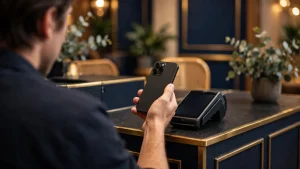
This distinction also applies to claims that describe an online casino as Australian-facing, mobile-friendly, or newly available. Those descriptions do not alter the legal boundary. A site’s wording, design, or payment branding cannot make an offshore real-money casino offer lawful in Australia. Nor does a payment option establish that a particular game category can be accessed legally.
If your concern is whether an operator may offer online casino games to people located in Australia, assess that question on its own. Do not infer the answer from a cashier label, a transfer instruction, or a claim about deposits. Likewise, a payment claim should not be treated as proof that an operator is safe, accountable under Australian consumer law, or able to resolve a dispute locally.
A careful comparison begins by keeping the categories distinct: the law governing the operator’s offer, the protections available to a customer, and the mechanics of a payment route. Combining them into one conclusion produces a misleading shortcut. A method can be familiar; that does not settle the legal question.
Deposits: What the Verified Amex Process Tells You
A payment method appearing in a cashier is a specific claim about how a deposit is made. It does not, by itself, establish that the service is lawful for Australian residents or that another payment route is available. The distinction matters when you are assessing claims about depositing with Osko: evidence describing an Amex process cannot confirm an Osko option.
Amex Deposit Process
-
1
Method Selection
Select Amex within the casino cashier.
-
2
Enter Details
Provide the card details and the deposit amount in Australian dollars (AUD).
-
3
Payment Submission
Submit the payment to complete the transaction.
A reported Amex deposit flow has three steps. The customer selects Amex in the cashier, enters the card details and an amount in Australian dollars, then submits the payment. That describes the sequence of a card transaction; it is not a general template for bank-linked payments. A transfer service may use a different process, and its availability cannot be inferred from the presence of a card option.
A specialist review reports that Amex deposits are offered at some Australian-facing online casinos. Treat that as a limited, changeable claim, not a guarantee about any particular cashier. Payment menus and terms can differ between operators and can change. The relevant question is not simply whether a page mentions Amex, but whether the cashier and its terms identify that method for the transaction in question.
The reported processing time for Amex deposits is instant. That is a statement about the card route, not a promise that every transaction will complete without delay. It also says nothing about Osko processing. Applying the Amex timing to a bank-linked service would mix two different payment methods.
For a clear comparison, separate the information into categories:
| Point to verify | What the Amex description covers |
|---|---|
| Where the method appears | Amex is selected in the cashier |
| Details entered | Card details and an AUD amount |
| Submission | The customer submits the payment |
| Processing | Amex deposits are described as instant |
| Osko availability | Not established by the Amex process |
This helps prevent a common category error. A site may describe one payment route in detail while a separate claim refers to another. The first does not prove the second. In particular, an Amex cashier flow cannot tell you whether Osko is listed, whether a bank transfer uses Osko, or what conditions would apply to an Osko transaction.
The amount field also needs careful interpretation. The process specifies that the deposit amount is entered in AUD, but it does not establish a minimum or maximum deposit. Nor does the description supply a particular amount such as a small fixed deposit. A number in a search phrase is not evidence that an operator accepts that amount. Any amount-specific claim would need to be checked against the relevant operator’s current terms, rather than inferred from the payment method.
Likewise, the sequence does not settle whether a transaction will be accepted. A selected method and completed form are steps in the process, not proof of the outcome in every case. The useful distinction is between a documented interface—what a customer is asked to enter—and a confirmed transaction—what the operator and payment provider actually process. Those are related, but not interchangeable.
There is also a legal boundary around this discussion. Under the Interactive Gambling Act 2001, operators may not provide real-money online casino games to people physically located in Australia. Describing a payment flow is not a recommendation to use an offshore casino, and a payment option does not make the underlying service lawful. Australian consumer law does not protect players who use offshore casinos.
If you are comparing payment claims, keep the evidence tied to the method it actually describes. For Amex, the reported process identifies the cashier selection, card details, AUD entry and submission, with instant processing reported for deposits. For Osko, those details establish nothing. A route-specific claim needs route-specific confirmation; otherwise, the comparison has no reliable basis. A neat distinction, and an important one.
Withdrawal Timing Depends on the Payment Route
A payment can be quick in one direction and slower in the other. The stated timing for Amex illustrates the difference: deposits are processed instantly, while a specialist review reports that an Amex withdrawal may take up to five days to clear. Those are separate stages of moving money, not two descriptions of one transaction. “Instant” on a deposit does not establish that a withdrawal will be instant too.
That distinction matters when you see a claim about instant Osko withdrawals. The word can sound precise while leaving the important part unclear: what event is supposed to happen instantly? A payment being submitted, processed, or cleared are not necessarily interchangeable descriptions. Before treating an advertised speed as a useful comparison, look for the exact route and the point in the transaction to which the timing refers. A fast-sounding label is not a timetable.
Compare like with like
A fair comparison keeps the payment direction constant. Amex deposits provide one reference point: they are processed instantly. Amex withdrawals provide another: a specialist review gives a clearance period of up to five days. The difference is a reminder that deposit speed cannot be used to predict payout speed, even when the same payment method is involved.

It also means that a general promise of an “instant withdrawal” needs more detail before it can be compared with the Amex withdrawal timing. Does the claim refer to the operator handling a request, or to funds clearing through the payment route? Without a defined endpoint, “instant” may not tell you when money will actually be available. If a stated period applies only to deposits, it says nothing about withdrawals. If it applies to a different method, it is not an Amex comparison.
For Osko, the same discipline applies. An instant-sounding claim should identify Osko as the withdrawal route and describe what “instant” refers to. A claim about rapid deposits would not establish rapid withdrawals. Nor does the Amex comparison establish whether a particular casino supports Osko payouts. It shows only why method and direction should be assessed separately.
Read the timing claim closely
When you encounter a statement about withdrawal speed, check its wording rather than relying on its headline. Does it clearly refer to a withdrawal, rather than a deposit? Does it name the payment method? Does it describe processing or clearance? Those distinctions help you decide whether the claim answers the question you actually have.
The Amex timing provides a concrete contrast, but not a universal benchmark. The specialist review’s figure is specific to Amex withdrawals; it should not be transferred to Osko or treated as a prediction for another payment route. Equally, the instant processing of an Amex deposit is not evidence that an Amex withdrawal clears instantly. Payment direction changes the comparison.
Do
- Compare the same payment direction (deposit vs withdrawal)
- Verify the specific payment method being discussed
- Distinguish between processing and clearance time
Don't
- Use deposit speed to predict payout speed
- Transfer timing data from one method to another
- Rely on bold labels like "instant" without route details
If a page combines “instant,” “Osko,” and “withdrawal” without explaining how the timing is measured, the wording alone does not settle the practical question. You need a clear description of the route and the stage that is timed. Otherwise, a claim may describe speed at an earlier point in the transaction while leaving the clearance time unspecified. Precise language matters more than a bold label.
The sensible comparison is therefore narrow: Amex deposits are processed instantly; a specialist review says Amex withdrawals can take up to five days to clear. For a claimed instant Osko payout, look for an equally clear statement about the withdrawal route and its timing. Do not infer payout speed from deposit speed, or transfer one method’s timing to another.
That is the useful distinction—not a promise that every payment route moves at the same pace, and not proof that instant Osko withdrawals are available. Compare the same direction, the same method, and the same transaction stage. Otherwise, “instant” is just a word.
Choosing a Payment Method by the Criterion That Matters
“Best” only means something once you choose the criterion. A method with broader acceptance may be less useful to you than one with a higher transaction limit; neither comparison answers whether a payment route supports withdrawals. These are separate checks, not a single ranking.

A specialist review reports that Visa may be accepted at more Australian online casinos than Amex. The same type of review says Amex transaction limits can be higher than those offered for Visa and Mastercard. Treat both as comparisons reported by that source, not fixed rules for every cashier: payment options and limits can differ between operators and may change. The practical trade-off is clear enough. If acceptance is your main measure, Visa may compare favourably; if the stated limit is your measure, Amex may. That does not establish that either option is available at a particular service.
Withdrawal compatibility is a different criterion again. A method shown for deposits does not necessarily appear as a withdrawal option, so a deposit comparison cannot decide which route suits payouts. Check the stated withdrawal conditions separately rather than assuming that a cashier’s card logo covers both directions. The same caution applies to Osko: a request for an Osko option is not evidence that it is offered, and a payment label alone does not settle whether an online casino service may lawfully be provided to people in Australia.
A useful comparison therefore has distinct columns: acceptance, transaction limits, and withdrawal support. Do not collapse them into a single “best” score. A method may look stronger on one measure and weaker or simply unconfirmed on another. If the information you are comparing does not identify a measure, the ranking has no useful basis.
There is also a more basic boundary: no payment method makes an offshore online casino lawful for operators to provide to Australian residents. Payment comparisons should not be read as a recommendation to use such a service. Keep the question narrow—what the method claims to do, and on which transaction—and avoid treating a list of payment logos or an advertised bonus as proof of suitability. A tidy comparison is useful. It is not a licence.
A Game Category Does Not Determine Its Payment Options
A game category and a payment method answer different questions. The category describes what an online casino service offers; the cashier shows which transaction routes an operator makes available. Seeing Osko mentioned alongside a category does not establish that the payment method applies to that category—or that it is accepted by a particular operator.
The distinction matters because payment terms are set at the cashier level, not inferred from a label attached to a game. A reference to Osko in general payment information would not, by itself, confirm that you can use it for a particular activity. Likewise, details about another payment route cannot be treated as evidence of Osko support.
Use the cashier’s actual payment information as the relevant point of comparison. Check whether Osko is listed for the transaction you are considering, and read any conditions shown there. A method may be described for deposits without that description establishing anything about withdrawals. Those are separate transaction stages, and a general label does not settle both.

Do not treat a category-specific phrase as a payment guarantee. It may combine two subjects without showing a verified connection between them. The practical test is whether the operator’s current cashier explicitly identifies Osko and explains its role. If it does not, the category alone cannot fill that gap.
This is a narrow distinction, but an important one: payment availability belongs to the operator’s transaction arrangements, while a game category is not proof of those arrangements. No category label can establish Osko acceptance on its own. Nor does a payment-method reference prove that any particular game or service is available to Australian residents. The two claims need separate evidence, and one should not be used as a shortcut for the other.
For a careful comparison, keep the questions in separate columns: what payment method is expressly shown, what transaction it applies to, and what service the operator is offering. If the cashier identifies a method only generally, avoid reading more into it than the wording supports. That is a more reliable basis for assessing a payment claim than linking a category name to a payment method by association.
Australian Payment Habits and the Limits of This Evidence
Everyday payment habits in Australia provide useful context, but they do not establish which methods a particular online service accepts. Contactless credit and debit cards are accepted almost everywhere in the country. Mobile wallets, including Google Pay and Apple Pay, are also widely accepted. Australian consumers are comfortable moving between cards, mobile wallets and services linked to bank accounts, such as PayPal.
Common Australian Payment Habits
Australians frequently use contactless credit and debit cards, mobile wallets like Google Pay and Apple Pay, and services linked to bank accounts such as PayPal.
That familiarity describes how people pay across everyday settings. It does not confirm that an online casino accepts any one of those methods, or that a particular bank-linked service is available in its cashier. A payment option’s presence in shops, apps or other online services is not evidence of its presence in a casino’s payment menu.
The same distinction matters when you are checking for Osko. General comfort with bank-linked services cannot establish that a particular operator supports Osko, how a transfer would be handled, or whether the method could be used for both deposits and withdrawals. Those are separate details, and they require clear, current information about the specific service. Familiarity is not confirmation.
A useful comparison therefore separates three questions: what Australians commonly use, what a particular cashier lists, and what the payment provider and bank allow for that transaction. The first is a broad consumer pattern; it cannot answer the other two. An Osko label or a general reference to bank-linked payments should not be treated as proof of casino acceptance.

There is also an important consumer-protection limit. Australian consumer law does not protect players who use offshore casinos. That makes it especially important not to treat a familiar payment method as evidence that a service is approved, protected or suitable for Australian residents. Everyday convenience and legal safeguards are different criteria.
The practical distinction is simple: common Australian payment habits can explain why people expect familiar options, but they cannot verify Osko availability at an online casino. Familiar, not verified.
Amex Withdrawals: Eligibility, Fees and Timing
An Amex deposit and an Amex withdrawal are separate permissions. A withdrawal through Amex may require you to have made an earlier deposit with that card; depositing successfully does not, by itself, establish that the same route can be used to receive winnings.
A specialist review reports that withdrawal arrangements differ between casinos: some do not permit winnings to be paid to Amex, and an additional fee may apply. Treat that as a reason to check the specific operator’s current payment terms, not as a universal rule. The cashier or written withdrawal conditions should make clear whether Amex is available for payouts and whether a charge applies. If those details are unclear, do not assume a deposit option guarantees a matching withdrawal option.
This creates a simple comparison:
| Point to check | What it means |
|---|---|
| Previous Amex deposit | May be a condition of requesting an Amex withdrawal |
| Amex payout eligibility | Not offered by every casino, according to a specialist review |
| Withdrawal fee | An extra charge may apply, so check the applicable terms |
The distinction matters because a payment method can be accepted for adding funds but unavailable for taking funds out. A stated fee also needs to be read in context: confirm whether it is charged by the operator and whether other conditions apply. Do not infer the fee or eligibility from another casino’s policy; payment rules can differ between operators and may change.
These Amex conditions do not establish whether a casino supports withdrawals through Osko. A search for an Osko payout and evidence about Amex concern different payment routes. The relevant details are method-specific: confirm the available payout method, eligibility conditions and any fee before relying on a payment claim.
The practical test is not whether Amex appears in a deposit menu, but whether the withdrawal terms explicitly allow it for your account. Different question.
Paying by Osko: What You Can and Cannot Confirm
If you want to pay by Osko, the key point is whether the cashier explicitly offers it and sets out how that payment is handled. Information describing a different payment route cannot answer that question. An Amex deposit, for instance, involves selecting Amex in the cashier, entering the card details and an AUD amount, then submitting the payment. That process says nothing about whether Osko is available.
So a statement that a payment method is accepted should be specific to Osko, rather than inferred from general references to bank-linked payments or electronic transfers. Those labels can cover different services and transaction arrangements. Without a clear Osko option and terms, you cannot establish that a particular operator accepts it for deposits.
The same distinction applies to withdrawals. Deposit support would not, by itself, confirm that Osko can be used to receive winnings. Deposit and payout routes can have different conditions; treat each as a separate question and look for terms that identify the payment method and explain its role.
This is a narrow but useful test: an Amex process verifies only the stated Amex steps. It does not verify an Osko casino payment method, nor does it show that Osko is unavailable. Avoid treating a list of other payment options as a yes or no answer about Osko.
Before acting on a payment claim, check the cashier and the operator’s current payment terms for an explicit Osko reference. Confirm whether it applies to deposits, withdrawals, or both, and whether any stated conditions affect your transaction. If the wording is unclear, the sensible conclusion is limited: acceptance has not been established. That is different from claiming the method is rejected.
This distinction matters for searches framed as “which casino accepts Osko?” A name appearing beside unrelated payment information does not settle the question. The payment method itself must be identified. No shortcut there.

Slot Payment Searches Do Not Verify Slot Availability
A phrase combining a game category with a payment method joins two separate questions. Asking whether online slots accept Osko does not establish that those games are available to people in Australia, nor does it confirm that an operator accepts Osko. The wording alone proves neither point.
Payment information discussed here concerns Amex: a deposit involves selecting it in the cashier, entering card details and an amount in AUD, then submitting the payment. That process cannot be used to infer how Osko works, or whether it is offered. One payment route is not evidence for another.
The same distinction applies when a search is phrased as slots that use Osko. Games do not themselves use a payment service; payment arrangements belong to an operator’s cashier. Even a clear statement about one route would not establish the cashier’s other options, and a payment claim would not establish game availability.
For Australian readers, there is a further boundary: the Interactive Gambling Act 2001 prohibits operators from providing online casino games, including slots, to people in Australia. A payment label does not change that legal position. Australian consumer law also does not protect players using offshore casinos.
Keep the categories separate: a game-related phrase is not proof of availability, and a payment reference is not proof of acceptance. The reliable conclusion is narrow. Amex has a described deposit process; that tells you nothing about Osko support or whether slots are available. Two claims, not one.
How do you check if casino sites accept Amex deposits?
Check the casino cashier for American Express before depositing. Even if it is listed, your bank or Amex may block the transaction.
What are the deposit and withdrawal limits at the best Amex casinos?
Each casino sets its own Amex deposit and withdrawal limits, so check the limits shown in that casino’s cashier or payment terms.
Can I withdraw winnings directly to my American Express card?
Some casinos allow Amex withdrawals, but others do not; where withdrawals are supported, you generally need to have deposited with Amex first.
Are there fees for using Amex at online casinos?
Amex deposits are typically free, but a casino may charge a 1.5% transfer surcharge, currency conversion can cost 3%, and withdrawal fees may apply.
Which online casinos accept American Express for deposits?
Jackpot City Casino, Spin Palace, Ruby Fortune, Ignition Casino, Joe Fortune, and PlayAmo are listed as supporting Amex deposits for Australian players.
How long do Amex casino deposits take to process?
Amex casino deposits are processed instantly, although a payment may be declined if Amex or your bank blocks gambling transactions.
Can I use Amex to withdraw winnings from an Australian online casino?
Some casinos allow Amex withdrawals, but not all do; you generally need to have made a deposit with Amex first.
Are casino Amex payments instant?
Amex deposits are processed instantly. Withdrawals can take up to five days to clear.