
Check card access without confusing it with legality
Card options can vary by casino, while accepting a payment does not establish that the underlying gambling service is lawful in Australia.

Credit-card acceptance—and the Australian legal boundary
A card logo in an online cashier tells you something about payment processing, not whether the service is lawful to provide in Australia. The distinction matters: a payment method may be presented as available to Australian customers while the underlying real-money casino service is prohibited for operators to offer to people in the country.
Card acceptance is not universal. A specialist review reports that Amex deposits are available at some Australian-facing online casinos, but that is a limited, time-sensitive claim—not a guarantee that any particular cashier will take your card. Payment options can differ between services and may change. Seeing a card brand mentioned on a website, or finding a payment option in a cashier, does not establish that an operator may legally offer casino gambling to people in Australia.
That is the first comparison to make: payment availability versus legal status. The first concerns whether a transaction might be accepted. The second concerns whether the service itself can lawfully be offered to you. They are separate questions, and a positive answer to the payment question does not settle the legal one.
Top operators
If you’re looking for an Australian casino site that accepts credit cards, check the available payment methods and terms directly before depositing. This list provides a brief reference to the limited operator details available.
-
Thor Casino
- License
- Curacao – Antillephone N.V. (Versus Odds B.V.)
- Min. deposit
- EUR 20
Thor Casino is listed with a Curacao licence held by Antillephone N.V. for Versus Odds B.V. Its stated minimum deposit is EUR 20.
-
Lucky Dreams
- License
- Curacao
- Min. deposit
- A$20 (POLi)
Lucky Dreams is listed with a Curacao licence and a minimum deposit of A$20 via POLi. The supplied details do not specify credit card availability.
-
DragonSlots Casino
- License
- Curacao Gaming Authority (Jumpman Gaming Ltd)
DragonSlots Casino is listed with a Curacao Gaming Authority licence associated with Jumpman Gaming Ltd. No payment or deposit details were provided.
-
Neospin
- License
- Curacao Gaming Control Board OGL/2023/176/0095 (Hollycorn N.V.)
Neospin is listed with Curacao Gaming Control Board licence OGL/2023/176/0095, held by Hollycorn N.V. No payment or deposit details were provided.
-
Playfina Casino
- License
- Curacao eGaming (Hollycorn N.V., since 2017)
- Min. deposit
- A$20-30 (depends on the offer)
Playfina Casino is listed with a Curacao eGaming licence held by Hollycorn N.V. since 2017. Its minimum deposit is A$20–30, depending on the offer.
-
7Bit Casino
- License
- Curacao, operated by Dama N.V.
7Bit Casino is listed as a Curacao-licensed casino operated by Dama N.V. No payment or deposit details were provided.
-
House of Pokies
- License
- international iGaming licence – jurisdiction not named in the source
- Payout speed
- PayID 1-24 hours
- Min. deposit
- A$30 (PayID from A$10)
House of Pokies has an international iGaming licence, though the jurisdiction is not named in the supplied details. PayID payouts are stated as taking 1–24 hours, and the minimum deposit is A$30, or A$10 via PayID.
-
JustCasino
- License
- Curacao Gaming Control Board
JustCasino is listed with a Curacao Gaming Control Board licence. No payment or deposit details were provided.
-
SpinsUp
- License
- Curacao Gaming Control Board OGL/2023/174/0082 (Dama N.V.)
SpinsUp is listed with Curacao Gaming Control Board licence OGL/2023/174/0082, held by Dama N.V. No payment or deposit details were provided.
-
Golden Pokies
- License
- Curacao
Golden Pokies is listed as a Curacao-licensed casino. No payment or deposit details were provided.
What Australian law says
The Interactive Gambling Act 2001 makes it unlawful for operators to provide real-money online casino games to people located in Australia. This covers online casino games such as poker and table games, as well as other casino-style offerings. The restriction is directed at the operator providing the service; the Act does not explicitly make an individual player’s use of an offshore site a criminal offence.
The Australian Communications and Media Authority (ACMA) enforces the Act. Offshore services may therefore face blocking and other enforcement action, and access should not be mistaken for approval. A site being reachable, accepting account details, or displaying a card option does not mean it is authorised to provide online casino gambling in Australia. Nor does a foreign licence change the Australian legal boundary.
There is another practical distinction: Australian consumer law does not protect people using offshore casinos. If a payment is disputed, a withdrawal is withheld, or an account is closed, you should not assume that the ordinary Australian consumer protections available for local services will apply. The absence of criminal liability for a player is not the same as having a protected or reliable route to resolve a dispute. Those are different kinds of risk.
How to read claims about card acceptance
When you encounter a claim that an online casino accepts credit cards, treat it as a statement about a payment facility, not a recommendation or a legal assurance. Check what the claim actually covers: a named card network, deposits, withdrawals, or merely a general list of payment methods. A reference to Amex deposits, for instance, does not establish that every Amex card will work or that the same card can be used for every kind of transaction. Availability at one service also says nothing conclusive about another.
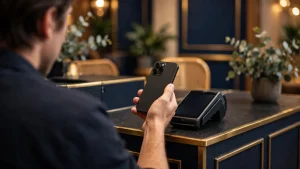
The wording can blur these distinctions. “Accepts cards” might describe a cashier option, while leaving the operator’s legal position and the scope of that option unstated. For an Australian reader, the relevant legal question comes before any comparison of payment convenience: is the service permitted to offer real-money online casino games to people in Australia? Under the Act, operators cannot offer those games to people here.
A polished cashier is not a legal document. Payment logos are not a substitute for checking the nature of the service, and a successful transaction would not make an otherwise prohibited offer lawful. Treating payment acceptance as proof of legitimacy reverses the order of the questions.
The decision point
If you are assessing a card claim, separate three things in your mind: whether the cashier displays the method, whether a particular transaction might be accepted, and whether the operator may offer the gambling service in Australia. Only the first of those is a basic statement about the website’s payment interface. It cannot answer the other two.
This is why a list of casinos described as accepting credit cards is not, by itself, a sound guide for Australian residents. It may tell you what a review or operator says about payment availability; it does not override Australian law or create consumer protection for offshore use. The controlling point is not which card symbol appears. It is the legal status of the service being offered. Payment access and legal permission are not interchangeable.
What happens when you make a card deposit
A card payment is a transaction, not evidence that a gambling service is lawful or protected for Australian customers. The Interactive Gambling Act 2001 prohibits operators from offering real-money online casino games to people in Australia. A cashier displayed by an offshore website does not change that position. This matters before considering what its payment screen might ask you to do.
Descriptions of an Amex casino transaction generally follow a simple sequence: the cashier presents a payment option, the customer chooses Amex, provides card details, enters a deposit amount in Australian dollars and submits the payment. That is a description of a website’s stated process, not a recommendation to use it. The available interface and the response to a payment can vary by site and issuer, so a familiar-looking checkout should not be treated as assurance that a transaction will succeed.
The amount is entered in AUD where the cashier offers that currency. Before submitting, a customer would ordinarily review the displayed amount and the payment details for errors. Those checks do not establish that the operator is authorised to serve Australians, nor do they provide the protections associated with an Australian regulated casino service. There is no such lawful online casino service for real-money play in Australia.

Once submitted, an Amex deposit is described as being processed instantly. “Processed” refers to the payment transaction being handled; it does not promise that every attempt will be approved, that a website will credit the account correctly, or that the funds can later be recovered. A transaction can still be declined. Fast processing is a timing detail, not a consumer safeguard.
A specialist review reports that Amex may block payments to a particular website, in which case an attempted deposit could be rejected. That is distinct from a cashier not displaying Amex at all: a listed method does not guarantee that the issuer will authorise a specific payment. If a payment is declined, repeated attempts do not make the underlying service lawful or improve the protections available to you.
Keep the distinction clear: a cashier describes how a site proposes to take money; it does not determine whether the site may offer online casino games in Australia. ACMA enforces the Interactive Gambling Act, which places the relevant prohibition on operators. Australian consumer law does not protect people using offshore casinos. The absence of player liability under that Act is not the same as consumer protection, and it does not turn an offshore transaction into a protected purchase.
For that reason, the practical sequence is less important than the decision point before it. A card form can request details and an AUD amount, and a payment may be handled quickly, but neither fact answers whether the service is lawful or what recourse exists if a payment is disputed. Treating the cashier’s completion message as a guarantee would confuse payment processing with protection. Those are different things.
Amex Deposit Process
-
1
Select Method
Choose the Amex payment option within the casino's cashier interface.
-
2
Enter Details
Provide your card information and enter the deposit amount in Australian dollars (AUD).
-
3
Review and Submit
Check the payment details for errors before submitting the transaction for processing.
If you encounter a request to enter Amex details on an offshore casino site, do not read the presence of a card option as approval by Australian authorities or as a promise that the issuer will accept it. A specialist review’s account of issuer blocking is a reminder that acceptance can fail at the payment stage, even where a site offers the method. The transaction’s status may therefore depend on both the cashier’s options and the issuer’s response.
A careful comparison of payment methods cannot fix the legal status of the service receiving the money. Nor does an instant processing claim settle what happens if the site does not honour a transaction. In Australia, those limits are central: the operator is prohibited from offering real-money online casino games, and Australian consumer law does not protect users of offshore casinos. A checkout flow may look routine. The consequences are not routine.
Amex, Visa and Mastercard: acceptance is the deciding difference
For a card comparison, separate two questions: whether a cashier lists a network and how much it permits you to transact. A card can offer a higher transaction ceiling yet be unusable at a particular site. Conversely, a more widely accepted network can be the more practical option when access is the main criterion. Neither feature guarantees that a payment will be available or approved.
A specialist review reports that Visa may be accepted at more Australian-facing online casino cashiers than Amex. Treat that as a comparison, not a promise about every operator: payment menus can differ, and a cashier’s displayed options are what matter for a particular service. The same review material notes that some casinos do not take Amex. That is a reason not to assume an Amex logo will appear wherever Visa is listed; it does not establish how common the difference is across the market.
Acceptance: Visa may have the edge
If your priority is the chance of finding a listed card option, Visa may have the advantage over Amex, according to a specialist review. That does not establish that every casino accepts Visa, or that Mastercard is accepted wherever Visa is. It is a relative observation, not a universal acceptance rule.

Amex is therefore the more conditional choice on acceptance. Some online casinos may omit it, so an Amex card alone may not match the payment methods offered by a given cashier. Mastercard should be assessed separately rather than treated as interchangeable with Visa: the network names can appear together in comparisons, but their acceptance at an individual site is not assured by that comparison.
This distinction matters because “accepts credit cards” is too broad to settle the question. A site might list one network and not another. If you are comparing options in general, the useful criterion is network-specific availability, not simply whether a card symbol appears somewhere on a page. A card logo is not a universal pass.
Limits: Amex may allow more headroom
Acceptance is only one side of the comparison. A specialist review reports that Amex transaction limits are generally higher than the limits associated with Visa and Mastercard options. The point is comparative: it does not establish a particular limit, nor does it mean every Amex card or cashier will offer a higher ceiling.
If a larger permitted transaction is your deciding criterion, that reported difference may make Amex worth checking where it is listed. If the priority is finding a supported network, Visa may be the stronger candidate according to the same type of review. The more suitable card therefore depends on which constraint matters to you: access or the transaction limit. There is no single winner on both measures in the available comparison.
The distinction between a network-level comparison and a site’s own rules is important. A higher reported Amex limit does not override a cashier that does not accept Amex. Nor does broad acceptance of Visa mean that its transaction limit will suit every user. Availability and capacity answer different questions; combining them into one ranking obscures the trade-off.
A practical comparison
| Criterion | Amex | Visa | Mastercard |
|---|---|---|---|
| Relative acceptance | A specialist review says some casinos do not accept it | A specialist review suggests it may be accepted more broadly than Amex | No comparative acceptance advantage is established here |
| Relative transaction limits | A specialist review reports higher limits than Visa and Mastercard options | Reported as lower than Amex in that comparison | Reported as lower than Amex in that comparison |
Use the table as a guide to the reported comparison, not as a catalogue of what any particular cashier will offer. The specialist-review findings are not fixed market-wide rules, and payment arrangements can change. A network’s general profile cannot confirm a current option at an individual site.
For an Australian reader, this is descriptive information about card networks, not a recommendation to use an online casino. The Interactive Gambling Act 2001 prohibits operators from providing real-money online casino games to people in Australia. A payment option does not change that legal position or make a service lawful.
The choice depends on your criterion. If wider reported acceptance matters most, Visa may be the better fit in this comparison. If the higher reported transaction limits matter more and Amex is listed, Amex may have the advantage. Mastercard remains a separate option to check rather than a guaranteed substitute for either. These are differences in reported card characteristics, not assurances that any card will be accepted.
When you would rather not use a credit card
In Australia, choosing how to pay is often a matter of habit rather than a strict preference for one type of payment. Contactless credit and debit cards are accepted almost everywhere, and mobile wallets such as Google Pay and Apple Pay are similarly widespread. You can move between tapping a physical card, using a phone or choosing a bank-linked service such as PayPal without treating any one option as the default.
That flexibility matters when you are comparing payment methods in general. A credit card keeps the payment attached to the card account; a debit card draws on funds in a bank account; and a mobile wallet provides a way to use a supported card through a device. PayPal is a separate bank-linked service. These options may feel interchangeable at the point of payment, but they are not the same arrangement: the underlying account and payment route differ.
Do
- Compare funding sources based on your spending habits
- Use mobile wallets if you prefer tapping your phone
- Use debit cards to pay directly from a bank balance
Don't
- Assume a payment method makes a prohibited service lawful
- Mistake broad local acceptance of a tool for legal approval of a casino
- Expect Australian consumer protections when using offshore sites
For an ordinary purchase, the practical question may be which method you already carry or prefer to use. If you are used to tapping a phone, a mobile wallet may be more natural than taking out a card. If you prefer paying directly from your bank balance, a debit card or a bank-linked service may fit better than credit. There is no universal winner; the relevant criterion is how you want the payment to be funded and handled.
Casino-related wording does not alter the Australian legal position. The Interactive Gambling Act 2001 prohibits operators from providing real-money online casino games to people in Australia. That means a phrase such as “online casino pay with credit card” is not a signal that the service is lawful or that a payment method makes it acceptable. The same applies if you are looking for a casino without a credit card, or considering whether to play casino games online using one. Payment preference and legal permission are separate questions.
The distinction is especially important because familiar payment methods are also used widely for lawful everyday purchases. Seeing contactless cards, Apple Pay, Google Pay or PayPal accepted across Australia does not establish that they can or should be used for an online casino service. Broad acceptance in shops and other settings is not evidence about the legal status of a particular gambling service.

Nor should a search for an online casino withdrawal to a credit card be taken as reassurance about consumer rights. Australian consumer law does not protect people who use offshore casinos. A payment option cannot provide that protection, and a familiar brand or interface does not change the position.
If you are weighing payment methods for legal purchases, the choice can remain straightforward: compare the funding source and select the method that suits your ordinary spending. For real-money online casino games, however, the relevant boundary is not whether you would rather use a card, wallet or bank-linked service. The law restricts operators from offering those games to people in Australia. Familiar payment tools do not make the service lawful.
Compare card options by limits and casino-specific conditions
A card’s network does not tell you what a particular casino will permit. For a useful comparison, separate the limit attached to the payment method from the rules set by the individual operator. The first may indicate how much a card can process; the second determines the deposit and withdrawal range available through that cashier.
| Comparison point | What to check |
|---|---|
| Deposit limit | The minimum and maximum the cashier allows for a card deposit |
| Withdrawal limit | Whether the casino sets a separate range for card withdrawals |
| Network comparison | Whether the stated limit applies to Amex, Visa or Mastercard |
| Conditions | Whether the displayed limit changes with the transaction type or account |
The distinction matters because an advertised card limit is not necessarily the limit you will see at every casino. A specialist review reports that Amex transaction limits are higher than those associated with Visa and Mastercard options. Treat that as a reported comparison, not a fixed rule: limits vary by casino, and the cashier’s current terms are the relevant point of reference.
A specialist review also notes that individual online casinos set their own Amex deposit and withdrawal limits, which can differ between operators. That means there is no single figure that defines what an Amex card can do across the market. A higher limit reported for one card network does not guarantee that a particular cashier will allow a larger transaction.
Compare like with like. A deposit ceiling and a withdrawal ceiling answer different questions, so do not assume that the amount you can pay in is also the amount you can receive back through the same card. Check whether the casino states a separate limit for each direction, and whether those limits are specific to the card network rather than shared across payment methods.
It also helps to compare the limit with your intended transaction rather than treating the largest figure as the automatic winner. If the available ceiling is more than you need, a higher maximum may add no practical value. If you need more room, the operator’s own limit may matter more than the network-level comparison. The better option depends on the transaction you need to make.
For Australian readers, this is a framework for understanding payment terms, not a recommendation to use an offshore casino. The Interactive Gambling Act 2001 prohibits operators from providing real-money online casino games to people in Australia. Where payment terms are relevant, read them as operator-specific conditions rather than evidence that the service is lawful or protected. Limits are only one part of the comparison.

Real-money play: checks and consumer protection
A request to use a credit card for real-money casino play involves more than whether a cashier displays a card option. Identity checks and the legal position matter too. For people in Australia, the distinction is especially important: payment availability does not make an online casino service lawful to provide here.
Online casinos typically require customers to complete a Know Your Customer (KYC) assessment before financial transactions. This is an identity-checking step associated with the account, not a guarantee that the service is legitimate or that you will have consumer protections. A request to complete KYC should therefore not be treated as evidence that an operator is authorised to serve Australians.
The legal boundary is set by the Interactive Gambling Act 2001. It prohibits operators from offering online casino games to people in Australia. The law does not explicitly criminalise players for using offshore sites, but that does not turn those services into a protected or locally approved option. The prohibition concerns the operator’s provision of the service; the player’s lack of criminal liability is a separate point.
That separation can be easy to miss when comparing online casinos that accept credit cards for real-money use. A card appearing as a payment choice tells you only that the payment route may be available. It does not establish that the operator can lawfully offer casino games to Australian residents, nor does it give you the protections that apply when dealing with a local service covered by Australian consumer law.
In particular, Australian consumer law does not protect people using offshore casinos. If a dispute arises with an offshore operator, you cannot assume that the usual local consumer-law protections will apply. Completing KYC does not change that position, and neither does a successful card transaction. Checks may be part of the operator’s financial process; they are not a substitute for legal protection.
For a practical comparison, keep the criteria separate: KYC is an account and transaction check; the Interactive Gambling Act sets a restriction on operators providing casino games in Australia; and Australian consumer law does not protect users of offshore casinos. A result that looks favourable on one criterion does not settle the others. The distinction is plain, if inconvenient.
Amex withdrawals: eligibility, fees and waiting time
An Amex payout is not simply the reverse of an Amex deposit. A casino may require you to have used Amex to fund the account before it will send winnings back to that card. If you deposited using another method, the card may not be eligible for the withdrawal, even if the cashier lists Amex for payments.
Availability also depends on the casino’s own rules. A specialist review reports that some casinos do not allow withdrawals to Amex, while others may apply an additional fee. Treat those as conditions to verify for the specific service, not as a universal rule: payment options and charges can change. Before relying on a card payout, check the withdrawal terms and the cashier’s available methods, including whether the stated fee applies to your transaction.
Timing is another separate consideration. A specialist review gives a clearing time of as long as five days for Amex casino withdrawals. That is a possible wait, not a guaranteed schedule. The cashier may show a processing stage before the funds clear, so distinguish the casino’s handling of a request from the time taken for the money to become available on the card.
| Check | Why it matters |
|---|---|
| Previous Amex deposit | It may be a condition for withdrawing to the card. |
| Amex listed for withdrawals | Some casinos do not permit this payout route. |
| Withdrawal fee | An additional charge may apply. |
| Clearing time | A specialist review reports that it can take up to five days. |
Keep records of the payment method used and the terms shown when requesting a withdrawal. If Amex is unavailable or a fee applies, the casino’s stated alternatives and conditions determine what can happen next; do not assume a card deposit guarantees a card payout.
These details concern payment rules reported for casino services. Australian residents should not take them as an endorsement: the Interactive Gambling Act 2001 prohibits operators from providing online casino games to people in Australia, and Australian consumer law does not protect people using offshore casinos.
Where Amex deposits and withdrawals are available
A specialist review reports that some online casino cashiers make Amex deposits available to Australian users. That does not mean the payment option is offered everywhere, or that it can be used to receive winnings. The cashier’s listed methods describe a particular operator’s payment arrangements; they do not establish that the service is lawful in Australia.
Withdrawal support is a separate question. A specialist review notes that not every casino that serves Australian users permits winnings to be returned to Amex. A card may therefore appear as a deposit option without being available for withdrawals. Check the operator’s stated rules for each transaction direction rather than treating “Amex accepted” as a complete answer.
This distinction matters when assessing an online casino accepting credit card payments: deposit availability and withdrawal availability are not interchangeable. The same label can conceal different conditions, and a payment method shown for adding funds may not be an option for receiving them. Availability can also change, so a past listing should not be taken as confirmation of present support.
There is a more important boundary. Under the Interactive Gambling Act 2001, operators must not provide real-money online casino games to people physically located in Australia. The Australian Communications and Media Authority enforces the Act. Whether a cashier displays Amex does not alter that legal position, and Australian consumer law does not protect people using offshore casinos.
For readers comparing casinos accepting credit cards, the relevant distinction is thus limited: some specialist reviews report Amex deposits at some services, while withdrawal access is not universal. Neither point is an endorsement or a guarantee of access. Payment availability is not legal permission.
If a casino does not take your card
A card being unavailable does not make an offshore casino lawful for Australians. The Interactive Gambling Act 2001 prohibits operators from providing real-money online casino games to people in Australia, and the Australian Communications and Media Authority enforces the Act. The alternatives below describe payment differences; they are not a recommendation to use an offshore service.

For a cardless payment, cryptocurrency and bank transfer have different trade-offs. Bitcoin and Ethereum can provide instant deposits and withdrawals, with limited or no fees. That combination favours speed and lower stated transaction costs, though it does not change the legal position of the service receiving the payment.
Bank transfers may take longer and cost more. A specialist review describes those as possible drawbacks, so check the terms for the specific payment route rather than treating them as fixed features of every transfer. The key comparison is straightforward: cryptocurrency is described as instant with limited or no fees; bank transfers may involve more waiting and higher charges.
If you are assessing an online casino with no credit card option, compare the payment method’s timing and fees before considering anything else. Do not assume that a displayed payment option is available to you or that it makes a prohibited service permissible. In Australia, the operator’s provision of real-money online casino games remains the central legal issue—not whether you pay by card, cryptocurrency or bank transfer.
Costs and issuer blocks when paying by Amex
The cost of an Amex transaction can come from more than one place. A specialist payment review reports that a casino may add a 1.5% surcharge to an Amex transfer. That is a possible operator charge, not a fee that should be assumed to apply to every transaction.
A separate cost can arise when currency conversion is involved. A specialist payment review reports a 3% currency conversion fee on Amex cards. Keep that distinct from any surcharge: they are different charges, and both may affect the total cost. Check the stated currency and fee terms before relying on the amount shown for a transaction. The distinction is simple; the bill may not be.
A declined payment is a different issue again. Australian banks may block gambling-related transactions at the issuer level, so a card can be rejected even where a payment option appears on a website. That is not the same as a surcharge or conversion fee: it is a restriction applied by the card issuer, rather than an extra cost added to a completed payment.
For an online casino using a credit card, separate the checks into three questions: whether a surcharge is stated, whether currency conversion applies, and whether the issuer permits the transaction. A displayed payment option does not settle all three. Costs and approval can depend on separate parties, so assess each condition on its own rather than treating the card’s presence in a cashier as confirmation that it will work.
How do you check if casino sites accept Amex deposits?
Check the site's cashier for American Express as a deposit option; availability varies, and seeing it there does not mean the casino is permitted to offer its service in Australia.
What are the deposit and withdrawal limits at the best Amex casinos?
Each casino sets its own Amex deposit and withdrawal limits, so check the limits shown in that casino's cashier. Amex limits are usually higher than those for Visa or Mastercard.
What should I do if my American Express deposit is declined?
Your issuer may be blocking payments to that website; Australian banks can block gambling-related Amex transactions.
Does American Express work for online casinos?
Yes, some online casinos offer Amex deposits, but not all accept the card, and acceptance does not make an offshore casino lawful to offer to people in Australia.
What are the fees involved with American Express payments?
Amex deposits typically have no fee, but a casino may add a 1.5% surcharge, and card currency conversion can incur a 3% fee. Withdrawal fees may also apply.
Can I withdraw winnings directly to my American Express card?
Some casinos do not allow withdrawals to Amex, and withdrawals generally require that you previously deposited with Amex. Where available, they can take up to five days to clear.
How long do Amex casino deposits take to process?
Amex casino deposits are processed instantly.